
Weather-based ad triggers represent the cutting edge of hyper-targeted DOOH advertising, but most marketers are leaving money on the table by making critical mistakes. Your digital signage advertising campaigns should respond intelligently to weather conditions: not just display random content hoping for the best.
Modern target marketing demands precision. When you can reach customers on digital signs within a 2.5 to 50-mile radius of any location, why waste that opportunity with poorly configured weather triggers? Let's fix the seven most expensive mistakes you're probably making right now.
Mistake #1: Setting Overly Narrow Weather Triggers
Your biggest enemy isn't bad weather: it's triggers so specific they rarely activate. Setting conditions like "exactly 75°F with zero cloud cover" means your ads display maybe three days per year in most markets.
This narrow thinking kills campaign frequency and eliminates your ability to build meaningful brand recognition. Your hyper-targeted DOOH strategy falls apart when nobody sees your ads.
The Fix: Broaden your trigger parameters while maintaining relevance. Instead of exact temperatures, use ranges like "above 70°F with partly sunny conditions." This keeps your flexible campaigns visible consistently while staying contextually appropriate.
Test broad triggers first, then narrow them based on actual performance data. Your digital signage advertising should be working for you every viable day, not sitting idle waiting for perfect conditions.

Mistake #2: Running Generic Creative That Ignores Weather Context
Weather targeting without weather-specific creative is like buying a Ferrari and never leaving first gear. Your ads must acknowledge and align with current conditions, or they feel completely random to viewers.
Generic creative undermines the entire premise of weather-based ad triggers. Customers notice when your messaging doesn't match their current experience: and they remember the disconnect.
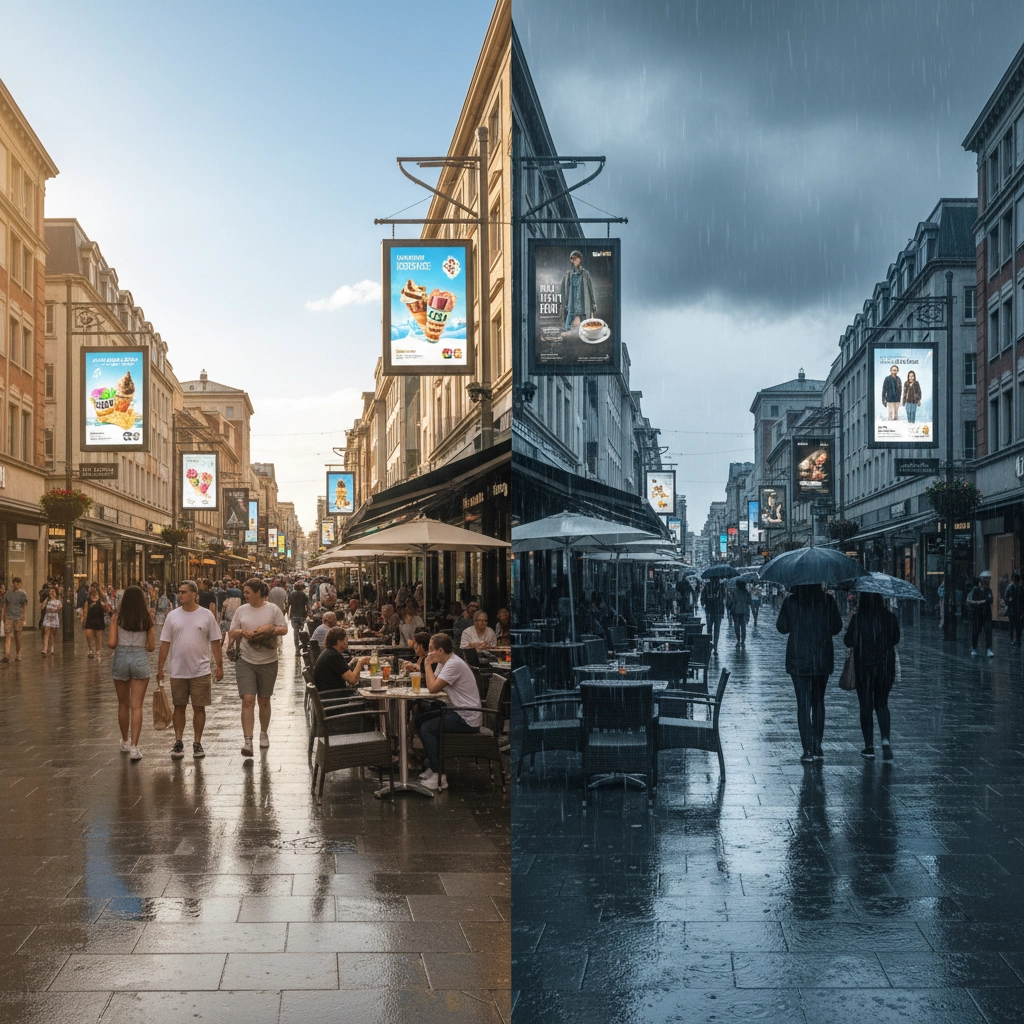
The Fix: Match your visuals, colors, and copy directly to weather conditions. Hot day ads should feature cooling imagery and refreshing colors. Rainy day creative needs cozy visuals and indoor-focused messaging.
This creates personal connection that makes your target marketing feel relevant rather than intrusive. When someone sees your hot weather ad during a heatwave, they feel like you understand their immediate needs.
Mistake #3: Relying on Unreliable Weather Data Sources
Inaccurate weather information destroys campaign effectiveness faster than any other factor. When your ads display sunny-day creative during thunderstorms, you look out of touch and waste precious impressions.
Cheap or outdated weather feeds create timing problems that undermine consumer trust. Your sophisticated venue targeting becomes worthless when triggered by wrong information.
The Fix: Partner with trusted weather data providers offering real-time accuracy. Services like OpenWeatherMap and Tomorrow.io integrate seamlessly with modern ad platforms, ensuring your campaigns respond instantly to actual conditions.
Reliable data costs more upfront but saves thousands in wasted impressions. Your weather-based ad triggers should be your competitive advantage, not your weakness.
Mistake #4: Skipping Historical Weather Pattern Analysis
Running weather campaigns without understanding historical patterns is like driving blindfolded. You need to know when weather actually affects purchasing behavior in your specific industry and geographic markets.
This mistake leads to poorly timed campaigns and wasted budget on conditions that don't drive consumer action. Your flexible campaigns should be based on data, not assumptions.
The Fix: Analyze historical weather data to identify meaningful patterns and trends. Understand which conditions correlate with increased demand for your products or services in each target market.
This analysis reveals optimal trigger thresholds and timing windows. Some products see increased demand at 80°F, others at 90°F. Your hyper-targeted DOOH campaigns should reflect these nuances.
Mistake #5: Ignoring Platform Technical Limitations
Every advertising platform has restrictions that can derail large-scale weather campaigns. Facebook limits custom locations to 200 per ad set. Google has similar geographic constraints that affect campaign structure.
Attempting large campaigns without accounting for these limitations creates coverage gaps and inconsistent delivery. Your sophisticated target marketing falls apart when technical restrictions aren't planned for.
The Fix: Structure campaigns within platform constraints before launching. Split large geographic campaigns into multiple ad sets to stay within location limits.
Plan your digital signage advertising architecture around these restrictions, not despite them. Understanding platform capabilities helps you design campaigns that actually work at scale.

Mistake #6: Running Weather Campaigns on Autopilot
Setting weather triggers and forgetting them is expensive laziness. Without ongoing testing and optimization, you'll never know if your temperature thresholds, timing, or creative actually resonate with your audience.
This mistake compounds over time as market conditions, consumer preferences, and seasonal patterns evolve. Your weather-based ad triggers become increasingly irrelevant without active management.
The Fix: Conduct regular A/B testing on trigger thresholds, creative variations, and timing parameters. Monitor engagement rates, conversions, and ROI closely to identify optimization opportunities.
Adjust your parameters based on actual performance data, not intuition. When one retailer optimized their weather triggers through systematic testing, they achieved 89% more clicks and 50% higher engagement rates.
Mistake #7: Failing to Coordinate Weather Campaigns Across Channels
Running weather-responsive ads on only one platform creates fragmented customer experiences. When consumers see your heat wave message on social media but encounter generic ads on digital billboards, the disconnect weakens your overall impact.
This channel isolation reduces the cumulative effect of your target marketing efforts. Your sophisticated weather strategy loses power when it's not reinforced across touchpoints.
The Fix: Coordinate matching weather-responsive creative across social media, search ads, and out-of-home placements. Use automation tools to synchronize messaging based on identical weather triggers.
This unified approach amplifies your message when customers encounter multiple touchpoints during the same weather conditions. Your hyper-targeted DOOH strategy should reinforce itself across every channel.
Advanced Weather Trigger Strategies That Actually Work
Modern flexible campaigns go beyond simple temperature thresholds. The most sophisticated marketers are using event-based triggers that account for weather, special events, and real-time conditions simultaneously.
Smart systems can suspend campaigns automatically when rain threatens outdoor events, or boost frequency during unexpected heat waves. This level of automation ensures your digital signage advertising responds intelligently to changing conditions without constant manual intervention.
Your weather-based ad triggers should also account for location-specific factors. A grocery store campaign might emphasize ice cream at 80°F, while a sporting goods campaign waits until 85°F for maximum impact.
The key is building trigger logic that reflects how weather actually influences purchasing decisions in your industry, not generic assumptions about consumer behavior.
Making Weather Targeting Work for Your Business
Weather-based advertising isn't just about temperature: it's about creating contextually relevant experiences that feel personal and timely. Your target marketing becomes more powerful when it acknowledges the immediate reality your customers are experiencing.
The brands winning with weather triggers understand that relevance beats frequency every time. A perfectly timed weather-appropriate message creates more impact than dozens of generic impressions.
Your hyper-targeted DOOH campaigns should feel like helpful suggestions rather than intrusive advertising. When someone sees your umbrella ad during an unexpected storm, they remember your brand as thoughtful and attentive.
This level of sophistication separates professional marketers from amateur efforts. Your flexible campaigns should demonstrate deep understanding of customer needs and market conditions.
Stop making these expensive mistakes and start leveraging weather data as the competitive advantage it should be. Your digital signage advertising deserves trigger logic that actually works.
Ready to implement weather-based ad triggers that drive real results? RAMM's advanced platform handles everything from radius targeting to weather-based campaign suspension automatically. Contact us at info@rammww.com or call +1 970-591-4238 to see how hyper-targeted DOOH can transform your marketing ROI.
Connect with RAMM on LinkedIn, Facebook, Instagram, and X for daily marketing insights and campaign optimization tips.
#WeatherTargeting #DOOHAdvertising #TargetMarketing #DigitalSignage #HyperTargeted #FlexibleCampaigns #MarketingAutomation #BrandStrategy #LocationBasedMarketing #SmartAdvertising

