
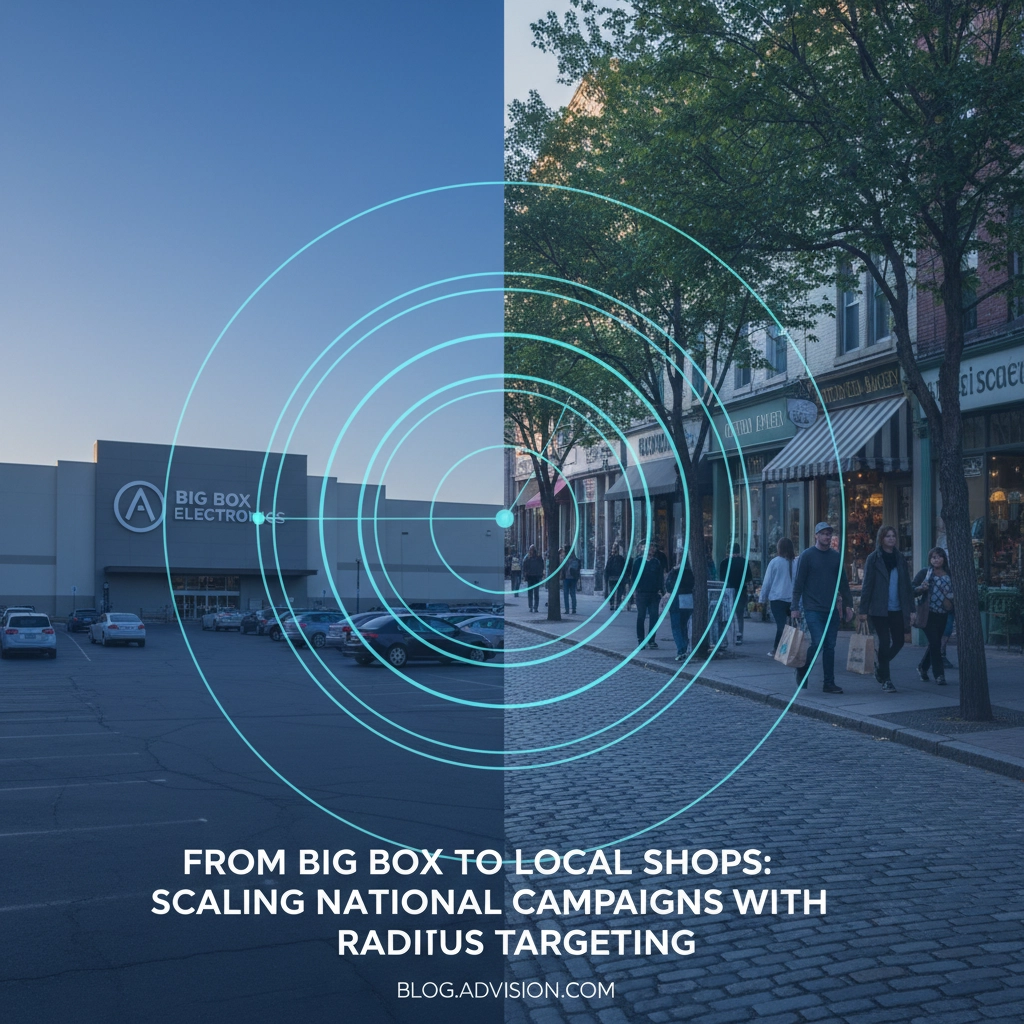
National brands face a fundamental challenge: how do you maintain consistent messaging while connecting authentically with diverse local markets? The answer lies in radius targeting: a strategic approach that transforms broad campaigns into precision instruments capable of driving meaningful engagement across every market type, from bustling metropolitan areas to suburban strip malls.
The Scale Problem Every National Brand Faces
You've invested millions in brand recognition, developed sophisticated marketing campaigns, and built a network spanning multiple markets. Yet your conversion rates vary wildly between locations. Your Times Square flagship performs differently than your suburban mall location, and your small-town presence struggles against local competitors who seem to connect more naturally with their communities.
This isn't a creative problem: it's a targeting problem. Traditional national campaigns treat all markets identically, ignoring the nuanced preferences and behaviors that drive local purchasing decisions. Meanwhile, purely local campaigns fragment your brand message and create operational nightmares for marketing teams managing dozens or hundreds of locations.
How Radius Targeting Bridges National and Local
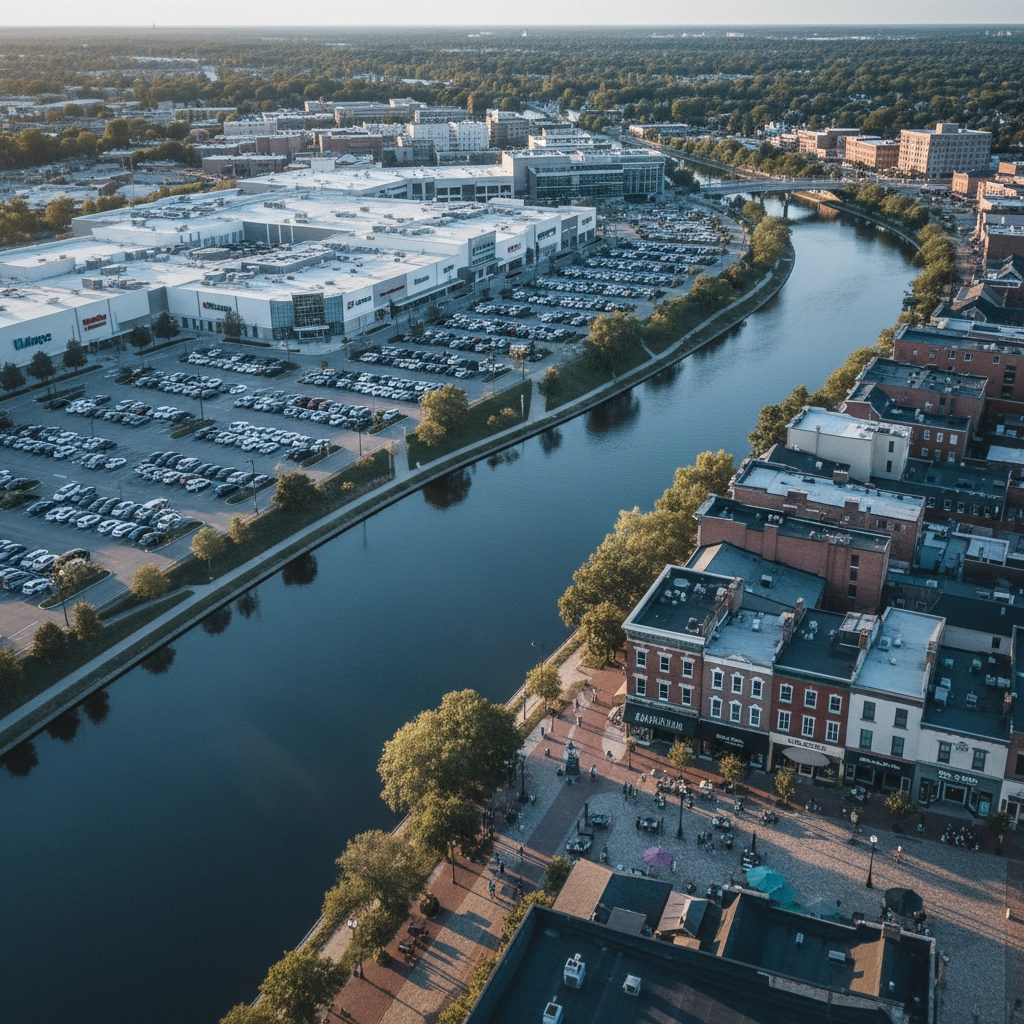
Radius targeting creates circular boundaries around your business locations, typically ranging from 2.5 to 50 miles, allowing you to deliver hyper-targeted messaging to customers within your actual service area. This approach ensures your advertising dollars focus exclusively on genuinely addressable customers while maintaining the consistency your brand requires.
Consider how this transforms your strategy across different venue types. Your grocery store partnership campaigns can target busy parents within a 10-mile radius during evening hours when they're planning dinner. Your restaurant promotions reach office workers within a 5-mile radius during lunch hours. Your retail campaigns capture weekend shoppers near shopping centers and transportation hubs.
The key advantage: you're not just reaching people who happen to live in your city: you're reaching people who can realistically become customers based on proximity and convenience.
Strategic Implementation Across Market Types
Big Box and Retail Locations
Large format retailers benefit from wider radius targeting, typically 15-25 miles, capturing customers willing to drive for better selection or prices. Your campaigns can highlight convenience factors like parking availability, extended hours, or exclusive product lines that justify the trip.
Target during peak shopping periods and adjust messaging based on local events. Back-to-school campaigns in college towns require different timing than in family-oriented suburbs. Weather-triggered adjustments ensure your outdoor furniture ads don't run during snowstorms while promoting indoor comfort items instead.
Restaurants and Food Service
Restaurant campaigns excel with tighter radius targeting, typically 3-10 miles, focusing on convenience and immediate satisfaction. Layer demographic targeting to reach working professionals during lunch hours, families during dinner time, and young adults during weekend late-night periods.
Implement event-based triggers that activate special promotions during local sports games, concerts, or community events. Your sports bar campaigns can automatically increase frequency when the local team plays, capturing the surge in foot traffic and enthusiasm.

Medical and Professional Services
Healthcare and professional service providers require strategic radius targeting that respects service territories while capturing referral opportunities. A 20-mile radius often works well, accounting for patients willing to travel for specialized care or professional services.
Focus on condition-specific targeting during relevant health awareness periods, adjusting messaging to emphasize expertise, convenience, and patient outcomes rather than generic promotional offers.
Mastering Multi-Location Coordination
Successful national brands coordinate radius targeting across all locations through centralized campaign management with location-specific customization. This approach prevents market cannibalization while maximizing overall revenue.
Establish clear geographic boundaries between locations, ensuring radius targeting doesn't create overlap conflicts. When locations are close together, adjust radius sizes and focus different locations on different customer segments or service offerings.
Weight your campaigns based on local market maturity. Established locations in high-awareness markets can focus 60-70% of efforts on conversion tactics: driving immediate foot traffic and sales: while maintaining 30-40% investment in brand reinforcement. New or struggling locations require heavier brand-building investment to establish local recognition.

Advanced Targeting Combinations
Layer radius targeting with additional parameters for maximum precision and efficiency. Combine geographic boundaries with demographic filters, behavioral indicators, and temporal scheduling to create campaigns that feel personally relevant.
Time-based layering ensures your campaigns align with customer behavior patterns. Coffee shop campaigns target morning commuters, lunch restaurants focus on midday office workers, and entertainment venues emphasize evening and weekend audiences.
Weather-based adjustments add another layer of relevance. Activate indoor activity promotions during rain, emphasize outdoor dining during perfect weather, and adjust seasonal offerings based on local climate patterns rather than calendar dates.
Measuring Success Across Diverse Markets
Track performance metrics that matter for your specific market types and campaign objectives. Foot traffic increase, local brand awareness, and conversion rates provide more meaningful insights than generic impression counts.
Monitor geographic performance variations to identify successful local strategies worth scaling to similar markets. A promotion format that works well in suburban family markets might translate effectively to other similar demographics, even in different geographic regions.
Analyze customer journey patterns to understand how radius targeting influences the complete purchase process. Some customers may see your ads multiple times within your radius before converting, while others respond immediately to location-based convenience messaging.
Optimizing for Long-term Growth
Build campaigns that evolve with your market understanding. Start with broader radius targeting to gather performance data, then optimize boundaries based on actual customer acquisition patterns and service capacity.
Develop location-specific creative assets that maintain brand consistency while incorporating local landmarks, cultural references, and regional preferences. This approach makes national campaigns feel authentically local without fragmenting your brand message.
Create feedback loops between your local teams and marketing operations. Store managers and local staff understand neighborhood dynamics that can inform more effective targeting and messaging strategies.
Ready to transform your national campaigns into precision targeting tools that drive real local engagement? RAMM's radius targeting platform gives you the flexibility to scale across every market type while maintaining the local relevance that converts browsers into customers. Discover how our hyper-targeted approach can optimize your multi-location strategy and deliver the consistent growth your brand deserves.
Explore RAMM's targeting solutions and see how radius targeting can bridge the gap between national scale and local success.

