
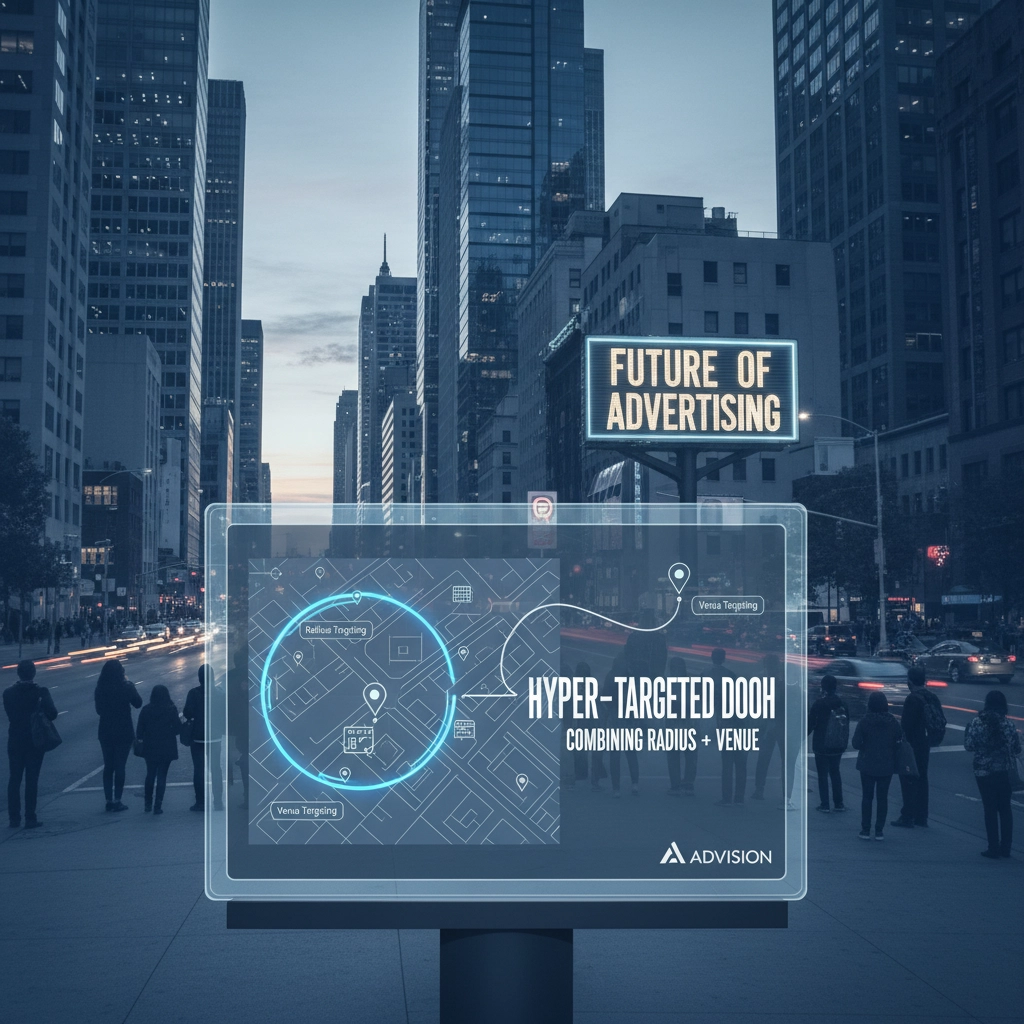
Stop throwing your advertising budget at broad digital campaigns that reach everyone and convert no one. The future of digital out-of-home (DOOH) advertising lies in hyper-targeted campaigns that combine radius targeting with venue-specific placement: and smart brands are already capitalizing on this powerful combination.
When you layer these two targeting strategies together, you create campaigns that don't just reach people: they reach the right people at the exact moment they're ready to buy. Here's how to master this approach and transform your DOOH campaigns from scattered to surgical.
Why Most DOOH Campaigns Miss the Mark
Traditional digital billboards cast a wide net, hoping someone in the vast audience will notice and act. This spray-and-pray approach wastes budget and delivers mediocre results. You're paying for impressions from people who will never buy your product, in locations where your message falls flat.
The problem isn't with DOOH itself: it's with the targeting approach. When you combine radius targeting with strategic venue selection, you shift from hoping for conversions to engineering them.
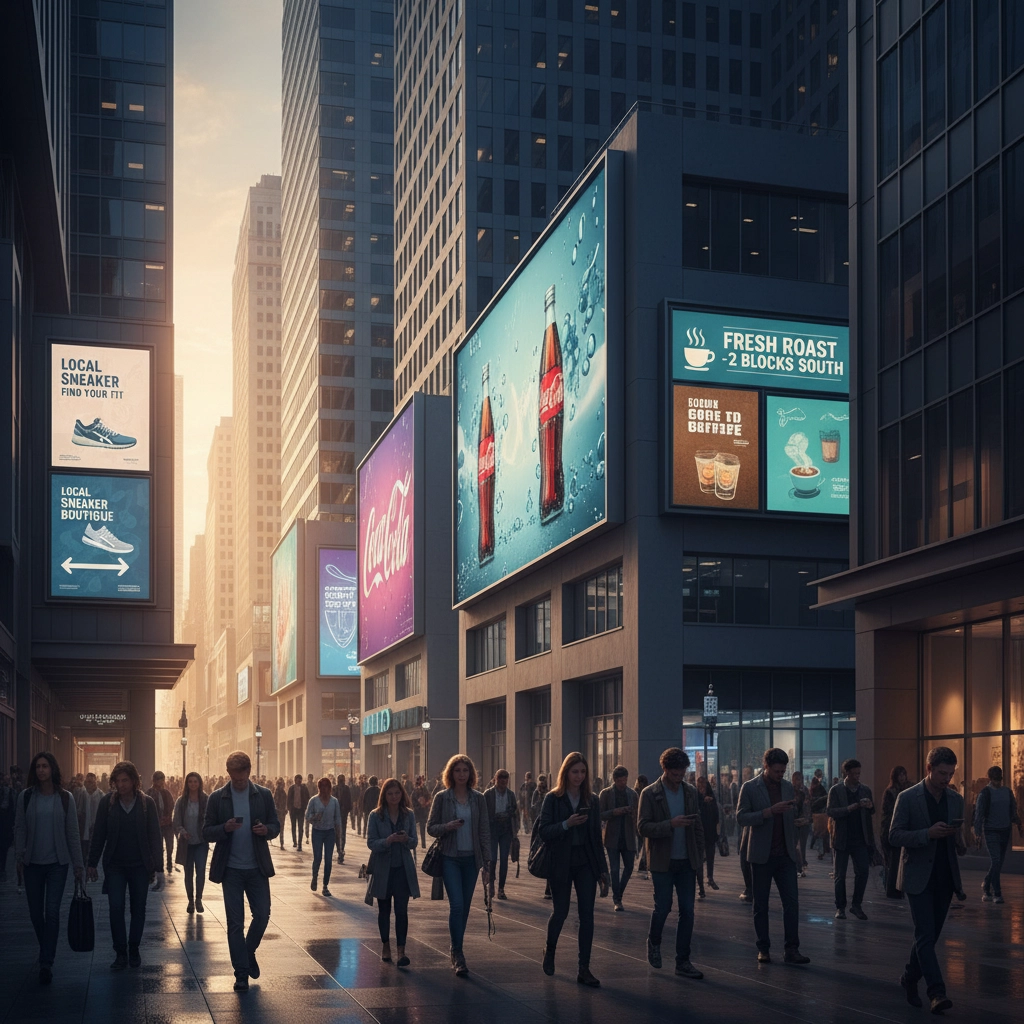
Understanding Radius Targeting: Your Geographic Precision Tool
Radius targeting uses geofencing technology to activate your ads within a specific distance from key locations. Think of it as drawing invisible circles around the places that matter most to your business: then delivering targeted messages to people who enter those zones.
Set a 2.5-mile radius around your flagship store, and your ads will only display to people within that zone. Expand to 50 miles to capture broader regional traffic. The flexibility lets you match your targeting to your business goals.
Here's where it gets powerful: you can create multiple radius zones around different types of locations. Draw tight circles around competitor stores to intercept their customers. Create broader zones around transportation hubs to catch commuters. Layer different radiuses around your own locations based on foot traffic patterns.
A coffee chain might use tight 1-mile radiuses around their shops during morning rush hour, then expand to 5-mile zones during afternoon lulls when people are willing to drive further for their caffeine fix.
Venue Targeting: Placing Your Message Where It Matters
While radius targeting defines where your audience is, venue targeting defines where your message appears. This means selecting specific types of locations where your target customers naturally congregate: grocery stores, medical offices, sports bars, restaurants, transportation hubs.
The key is matching venue type to customer behavior. A luxury car dealership doesn't need screens in budget grocery stores. They need placement in upscale shopping centers, high-end restaurants, and premium fitness clubs where their target demographic spends time.
Venue targeting also considers context. The same person might respond differently to your message depending on whether they're rushing through an airport or leisurely shopping at a mall. Your venue choice should align with the mindset you want to reach.
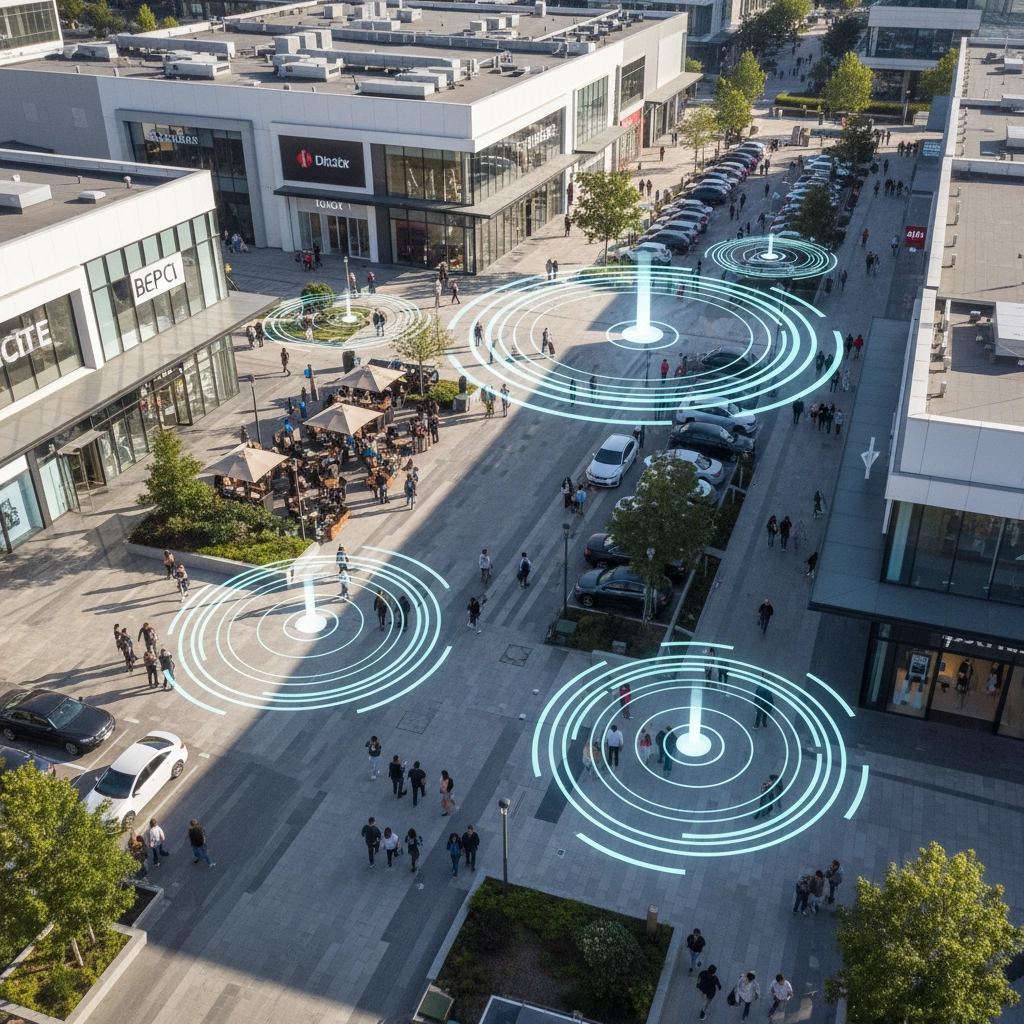
The Magic Happens When You Combine Both Strategies
Here's where hyper-targeted DOOH becomes incredibly powerful: when you layer radius targeting on top of strategic venue selection, you create campaigns with surgical precision.
Instead of choosing between reaching people in the right place OR reaching people near your business, you do both simultaneously. You place your ads in venues where your target audience gathers, then activate those ads only when high-intent prospects enter your geographic zones.
This combination solves the reach-versus-precision problem that plagues most targeted advertising. You maintain meaningful scale by selecting high-traffic venues, while ensuring every impression reaches someone who's geographically positioned to become a customer.
Real-World Scenarios: How Smart Brands Use Layered Targeting
Scenario 1: Restaurant Chain Weekend Rush
A regional pizza chain wants to drive weekend dinner traffic. They combine venue targeting (screens in sports bars and entertainment districts) with 3-mile radius targeting around their locations. The campaign only activates Friday through Sunday evenings when families are deciding where to eat.
Result: They're reaching people already in dining-and-entertainment mode, who live close enough to visit, during peak decision-making hours.
Scenario 2: Retail Store Holiday Promotion
An electronics retailer running Black Friday promotions uses venue targeting in shopping malls and retail centers, combined with radius targeting around their store locations. They add weather-based triggers to increase ad frequency when rain or snow keeps people indoors and more likely to shop.
Result: They intercept shoppers already in retail mode, who are close enough to visit, when weather conditions favor indoor shopping.
Scenario 3: Medical Practice Patient Acquisition
A dental practice targets health-conscious consumers by combining venue targeting (gyms, health food stores, medical offices) with radius targeting around their location. They schedule campaigns during lunch hours when people are most likely to book appointments.
Result: They reach people already thinking about health and wellness, who live or work nearby, during times when they're most likely to schedule appointments.
Advanced Targeting Features That Amplify Results
Flexible Scheduling Controls
Don't just set your campaign and forget it. Use flexible scheduling to activate different targeting combinations based on time of day, day of week, or seasonal patterns. Run tighter radius targeting during rush hours when people are closer to home, then expand during lunch hours when they might travel further.
Event-Based Triggers
Layer special event targeting on top of your radius and venue combination. When there's a concert at the local arena, expand your radius targeting and increase frequency for restaurants and entertainment venues nearby.
Weather-Based Adjustments
Weather affects behavior, and smart campaigns adapt accordingly. Increase targeting intensity for indoor venues during rain or snow. Expand radius targeting for ice cream shops during heat waves. Cancel outdoor venue campaigns during severe weather.
Continuous vs. Daily Custom Campaigns
Choose between continuous campaigns that maintain steady presence, or daily custom campaigns that deliver intensive bursts. A coffee shop might run continuous low-level targeting, with daily bursts during rush hours and weather events.
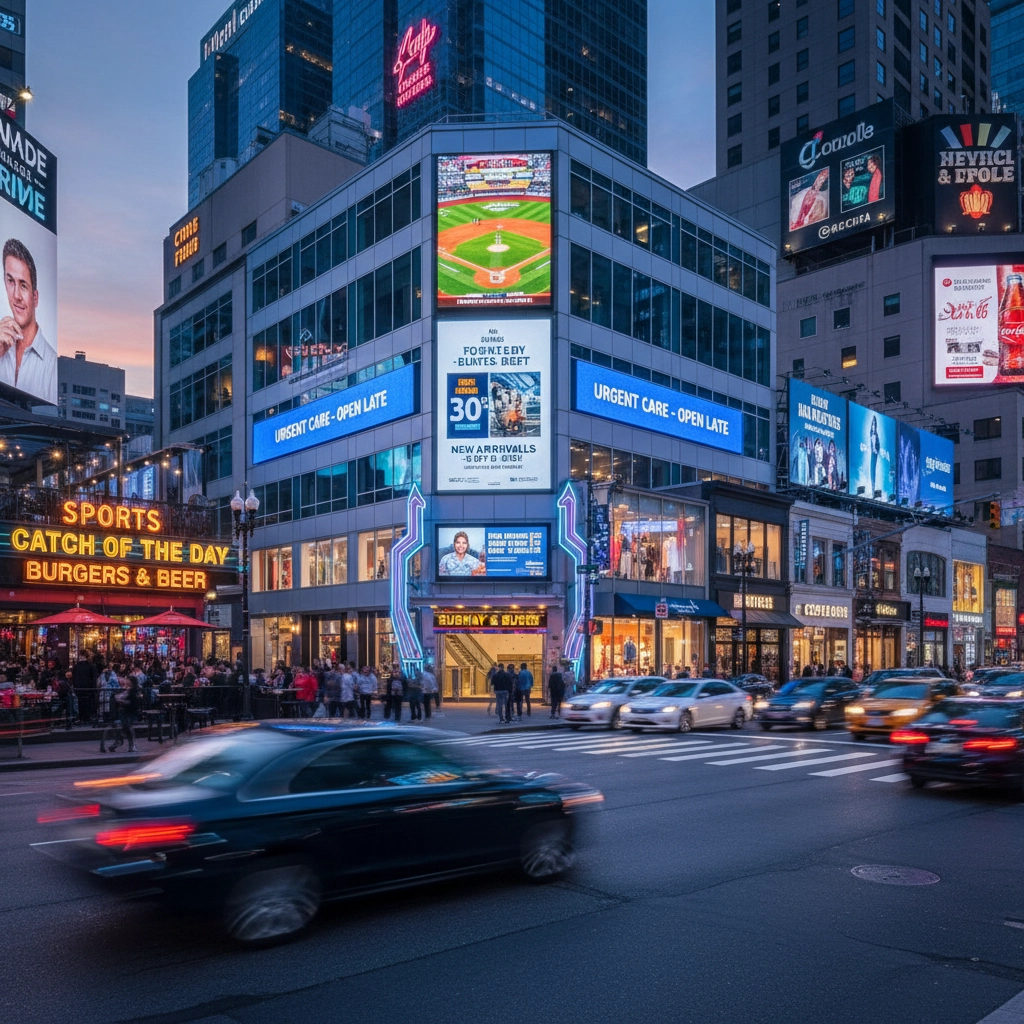
Setting Up Your Hyper-Targeted Campaign
Step 1: Define Your Core Geographic Zones
Start with a map of your business locations and identify the optimal radius for each. Consider foot traffic patterns, competition density, and customer travel behaviors. A downtown location might need a tighter radius than a suburban store.
Step 2: Select Complementary Venues
Choose venue types where your target customers spend time and are in the right mindset to respond to your message. Match venue selection to customer behavior patterns and purchase timing.
Step 3: Layer Your Targeting Logic
Combine your radius zones with venue selection to create targeting rules. For example: "Show ads in shopping centers AND within 5 miles of our stores, during weekend shopping hours."
Step 4: Add Behavioral Triggers
Incorporate time-based, weather-based, and event-based triggers that make your targeting even more precise. This is where campaigns move from good to exceptional.
Step 5: Test and Optimize
Start with conservative targeting parameters and expand based on performance. Monitor which radius-venue combinations deliver the best results, then allocate more budget to winning combinations.
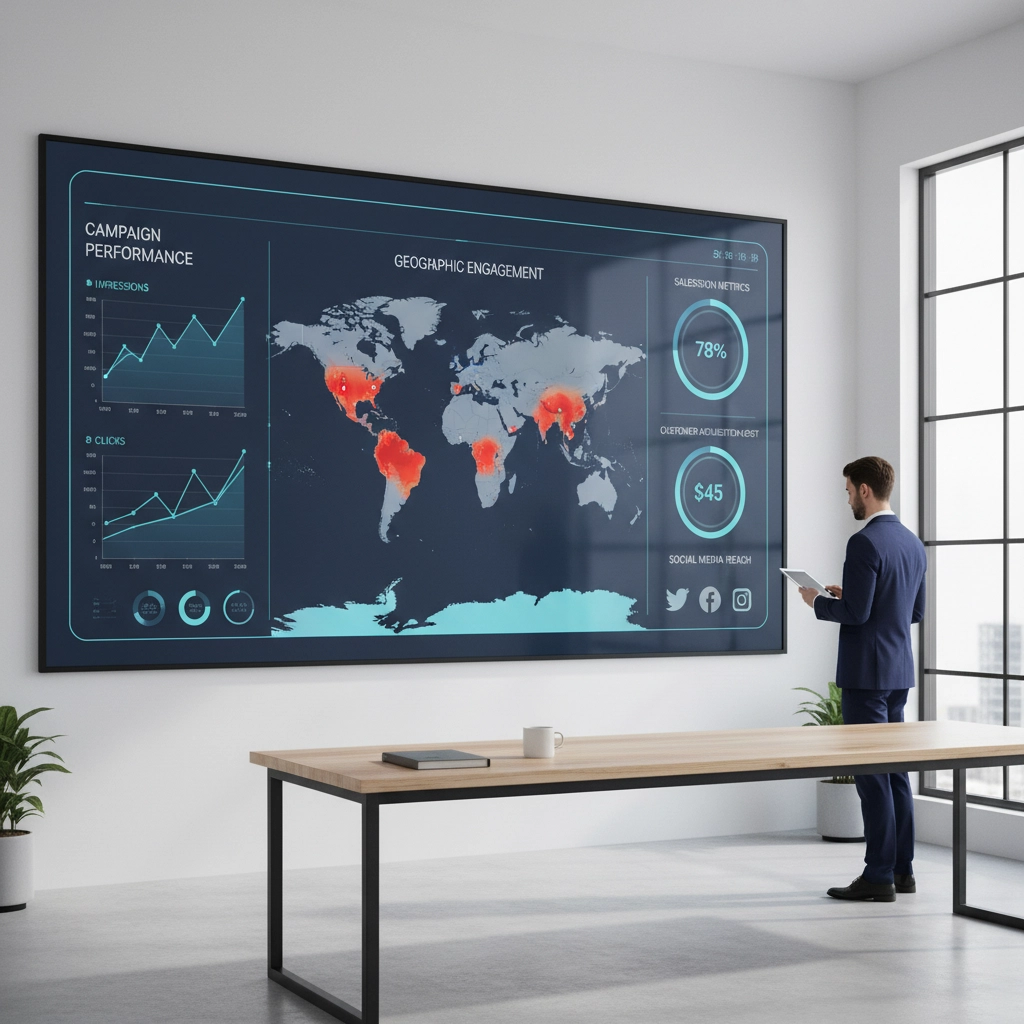
Measuring Success: Beyond Impressions
Traditional DOOH metrics focus on impressions and reach. Hyper-targeted campaigns demand better measurement. Track store visits, conversion rates, and customer lifetime value to understand true campaign impact.
Use attribution modeling to connect ad exposure with actual purchases. When someone sees your ad in a shopping center within your target radius and visits your store the same day, you've created a measurable conversion path.
Monitor radius performance by distance zones. You might discover that 80% of conversions come from within 3 miles, letting you tighten targeting and reduce wasted spend.
Transform Your DOOH Strategy Today
The brands winning with DOOH aren't just buying digital billboards: they're engineering precision-targeted campaigns that combine radius and venue targeting for maximum impact.
Stop accepting mediocre results from broad digital campaigns. Start creating hyper-targeted DOOH campaigns that reach the right people, in the right places, at the right moments.
Ready to see how radius and venue targeting can transform your advertising results? Contact RAMM today to discover how our flexible targeting platform can help you create campaigns that actually convert. With targeting options from 2.5 to 50 miles and access to any venue type, you'll finally have the precision targeting your brand deserves.

