
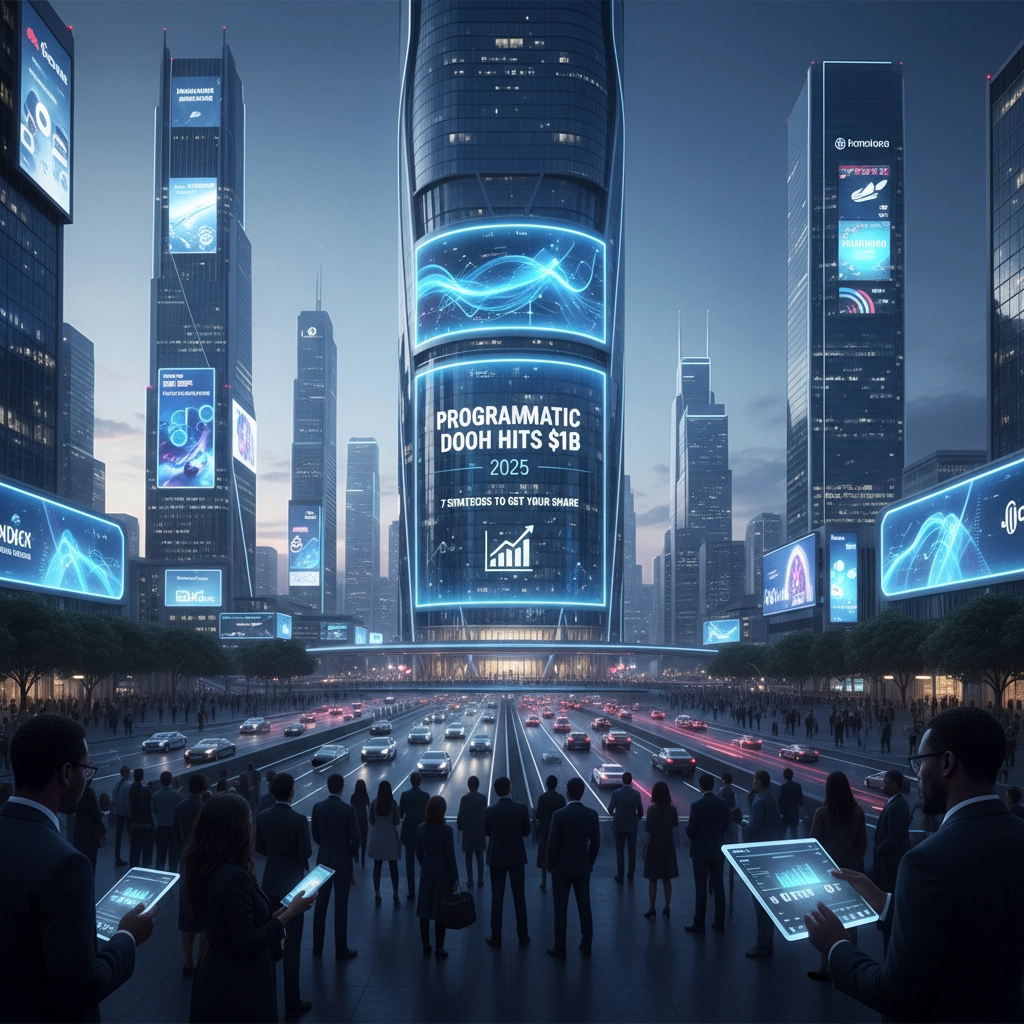
The programmatic digital out-of-home advertising landscape has fundamentally transformed, and you're witnessing a pivotal moment in marketing history. The U.S. market has officially surpassed the $1 billion mark in programmatic DOOH spending this year, while globally, the sector reached $2.2 billion USD, representing 10.9% of total DOOH revenues worldwide.
This isn't just another industry milestone: it's your signal to act. With the global programmatic DOOH market projected to grow at a CAGR of 31.5% through 2030, the window for early-mover advantage is rapidly closing. You need proven strategies to capture your share of this explosive growth.
Strategy 1: Master Real-Time Data Orchestration
Transform your campaigns from static placements into dynamic, responsive experiences. Programmatic DOOH's core strength lies in its ability to trigger ads based on live conditions: weather patterns, traffic density, local events, and time-sensitive opportunities.
Configure your campaigns to automatically adjust creative messaging when rain increases umbrella sales potential or when traffic jams create extended viewing windows. This real-time responsiveness delivers relevance that traditional outdoor advertising simply cannot match.
Set up automated triggers that respond to external data feeds. When temperature drops below 40°F, switch your creative to winter product lines. When local sports teams win, immediately deploy celebratory brand messaging. This level of responsiveness creates authentic connections with consumers in their moment of need.

Strategy 2: Deploy Advanced Audience Segmentation
Leverage sophisticated targeting capabilities that combine demographic insights with behavioral intelligence and precise location data. You're no longer limited to broad geographic targeting: programmatic DOOH enables you to reach specific audience segments based on their actual movement patterns and contextual behaviors.
Implement geofencing strategies around competitor locations, complementary businesses, and high-value demographic zones. Target fitness enthusiasts near gyms during peak workout hours, or reach business travelers at airports during flight delays when they have extended dwell time.
Use dayparting combined with audience analytics to optimize your message delivery. Morning commuters see different creative than evening entertainment seekers, even at the same location. This precision targeting maximizes relevance while minimizing wasted impressions on irrelevant audiences.
Strategy 3: Embrace Privacy-First Contextual Intelligence
Navigate the privacy-conscious landscape by focusing on contextual targeting that respects user privacy while delivering campaign effectiveness. This approach builds consumer trust while maintaining targeting precision: a competitive advantage as privacy regulations tighten.
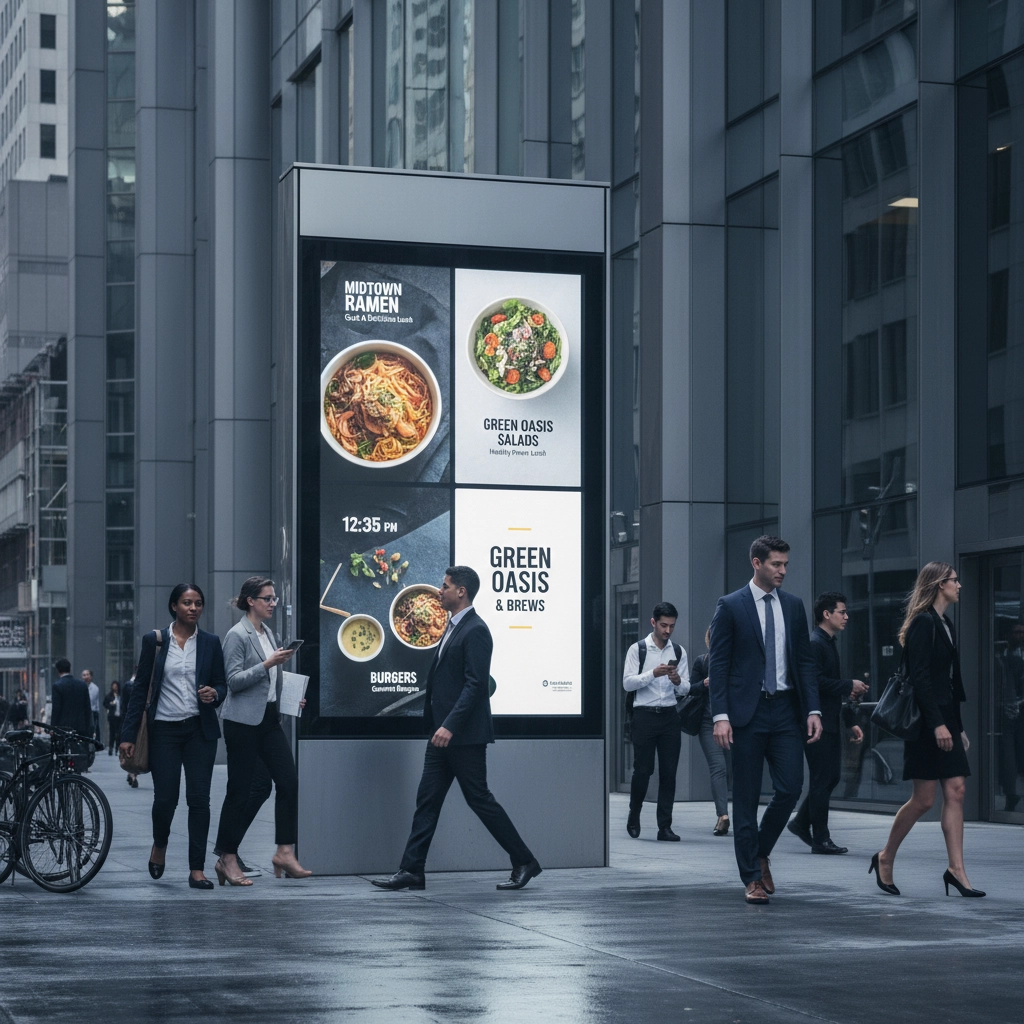
Develop contextual targeting strategies based on location characteristics, venue types, and situational contexts rather than personal data collection. Target business districts during lunch hours, entertainment venues during weekend evenings, or transit hubs during rush periods.
Create content that responds to environmental and situational context without requiring personal data. Weather-triggered campaigns, event-based messaging, and location-appropriate creative demonstrate relevance while maintaining privacy compliance.
Strategy 4: Build Omnichannel Campaign Architecture
Integrate your programmatic DOOH campaigns with television, digital video, and mobile advertising through unified platform management. This cross-channel orchestration amplifies your brand message while creating cohesive consumer experiences across digital and physical touchpoints.
Synchronize your DOOH creative with concurrent digital campaigns to create frequency capping across channels and prevent oversaturation. When consumers see your brand message on mobile, complement it with contextually relevant DOOH creative in their physical environment.
Use programmatic DOOH as both a trigger and amplifier for other channels. DOOH impressions can activate retargeting sequences on mobile devices, while digital engagement can influence DOOH creative selection for relevant geographic areas.
Strategy 5: Execute Full-Funnel Campaign Strategies
Move beyond traditional top-of-funnel awareness campaigns to create comprehensive customer journey experiences through programmatic DOOH. Use guaranteed programmatic deals for mass reach, then deploy data-triggered campaigns for engagement and conversion support.
Structure your campaigns to address different funnel stages within the same geographic area. New customer acquisition messaging during high-traffic periods, while retargeting campaigns focus on areas near your retail locations or service centers.
Implement sequential messaging strategies that build narrative over time. First exposure introduces your brand, subsequent impressions provide product details, and final touchpoints deliver clear calls-to-action with location-specific offers or promotions.
Strategy 6: Leverage Interactive Technology Platforms
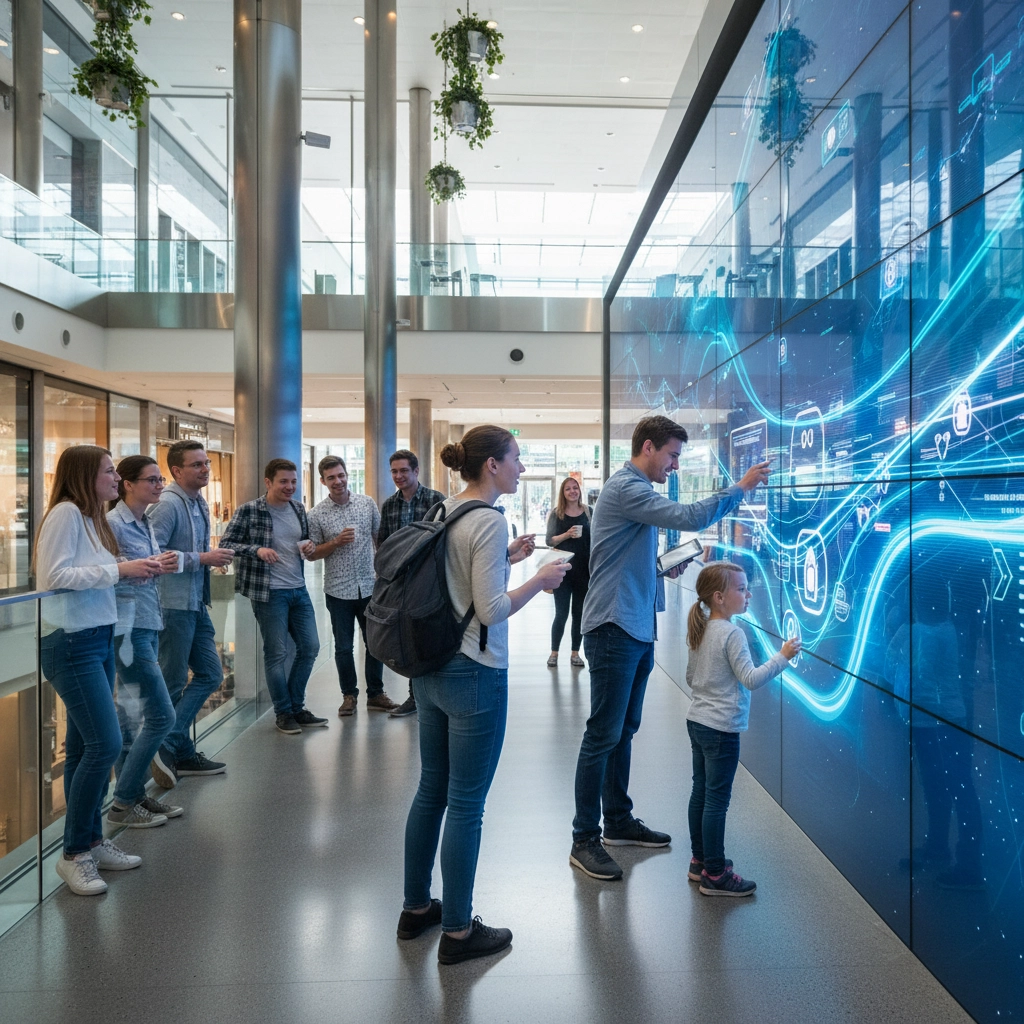
Capitalize on the fastest-growing segment of DOOH by incorporating interactive elements that transform passive viewing into active engagement. Touchscreens, QR codes, augmented reality features, and gesture recognition create memorable brand experiences that drive measurable actions.
Deploy interactive experiences in high-dwell locations like shopping centers, airports, and transit stations where consumers have time to engage with your content. Use interactive elements to collect opt-in data, provide personalized recommendations, or offer location-specific incentives.
Create social media integration opportunities that extend your DOOH campaign reach. Interactive displays that encourage social sharing or user-generated content amplify your campaign impact beyond the physical location while creating measurable engagement metrics.
Strategy 7: Implement Robust Measurement and Attribution
Establish comprehensive measurement frameworks that demonstrate clear ROI through foot traffic analysis, mobile location intelligence, and conversion tracking. Programmatic DOOH platforms provide detailed performance analytics that traditional outdoor advertising cannot deliver.
Set up attribution models that track consumer behavior from DOOH exposure through final conversion. Use mobile device tracking, store visit analysis, and online conversion tracking to build comprehensive customer journey maps.
Create dashboard systems that provide real-time campaign optimization insights. Monitor impression delivery, audience engagement rates, and downstream conversion metrics to make immediate campaign adjustments that maximize performance.
Develop comparative analysis between DOOH and other channel performance to optimize media mix allocation. Use foot traffic lift, brand awareness surveys, and sales correlation analysis to demonstrate DOOH's incremental value within your overall marketing strategy.
Market Timing and Competitive Advantage
You're entering this market at the perfect inflection point. Current adoption rates show 27% of marketers used programmatic DOOH in 2023-2024, with 35% planning to add it by year-end. Early movers gain significant advantages in premium inventory access, platform expertise, and measurement sophistication.
U.S. DOOH ad spend growth of 11.5% to $3.54 billion creates expanding inventory opportunities, while emerging markets in Asia-Pacific and Latin America offer first-mover advantages in rapidly developing smart city environments.
The convergence of urbanization, smart city development, and programmatic technology creates unprecedented opportunities for brands willing to invest in comprehensive DOOH strategies. Your competitive advantage depends on acting decisively while the market is still emerging.
Ready to claim your share of the billion-dollar programmatic DOOH opportunity? Start with one strategy, measure results rigorously, and scale successful approaches across your entire marketing portfolio. The brands that master programmatic DOOH today will dominate tomorrow's outdoor advertising landscape.

