
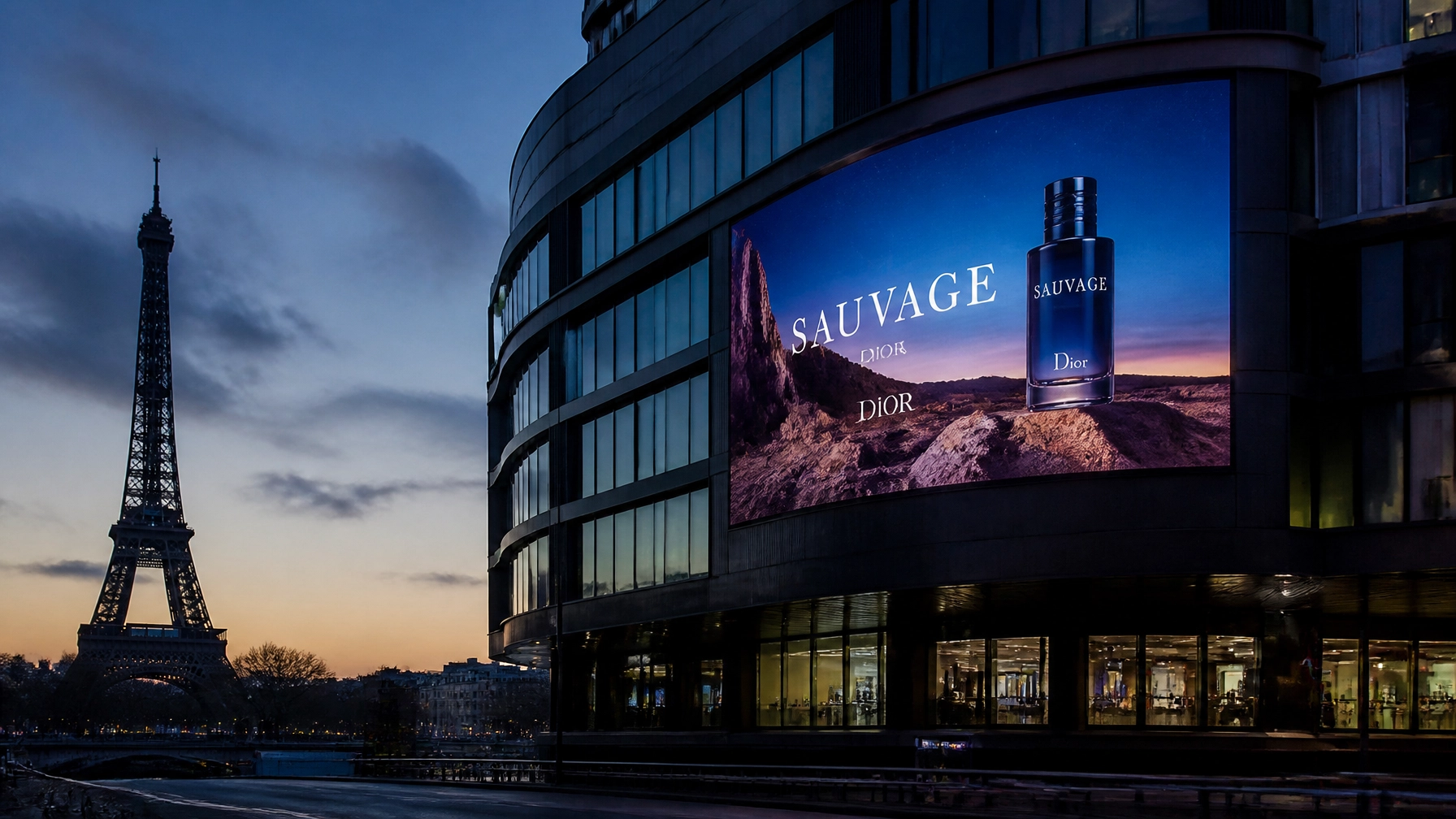
Choosing the right digital signage advertising strategy isn't just about picking a screen and uploading a JPEG. It’s about understanding the intersection of location, timing, and audience behavior to drive real-world results. In the fast-paced world of Digital Out-Of-Home (DOOH) advertising, your strategy determines whether your brand becomes part of the landscape or stays invisible.
Whether you are an agency managing a global portfolio or a brand with an in-house team like Johnson & Johnson or a growing craft beverage company, you need a framework that works. At RAMM, we operate a global network across New York, Los Angeles, Hong Kong, Paris, Munich, and Italy, giving us a front-row seat to what actually moves the needle.
Follow this guide to compare the most effective DOOH strategies and determine which one will scale your reach and maximize your return on investment.
The Three Pillars of Digital Signage Strategy
Before you dive into the specifics, you must understand the three primary ways digital signage is deployed today. Each has a specific purpose, and the best campaigns often use a hybrid approach.
- Loop-Based Strategy: The traditional backbone of digital advertising.
- Programmatic DOOH: The data-driven, automated engine for scale.
- Trigger-Based Advertising: The high-performance, context-aware method that leverages real-time data.
1. The Loop-Based Approach: Your Strategy’s Backbone
Maintain a logical flow by starting with the most familiar model. Loop-based advertising is where your content plays in a predefined sequence. This is ideal for brand building and ensuring a guaranteed "share of voice" in high-traffic venues.
Hook your readers with consistency. If you want your message to be seen every three minutes by everyone walking through a transit hub in Hong Kong or a luxury shopping district in Munich, the loop-based model is your best friend.
- Best for: Brand awareness, long-term sponsorships, and foundational reach.
- Key Advantage: Predictable exposure and easy budget management.
- Pro Tip: Align your loop length with the average dwell time of the venue. In a grocery store checkout line, a 60-second loop is perfect. In a transportation hub where people are moving fast, keep your assets under 10 seconds.

2. Programmatic DOOH: Scaling Across Continents
If your goal is flexibility and automated buying, programmatic is the way to go. This strategy allows media buyers and planners to bid on inventory in real-time, targeting specific audience segments rather than just screen locations.
You should use programmatic when you need to scale quickly across different markets: like launching a new product simultaneously in New York and Paris. It allows you to adjust budgets on the fly and pause campaigns based on performance data.
- Best for: Flexible budgets, audience-specific targeting, and multi-city campaigns.
- Key Advantage: You only pay for the impressions that meet your specific criteria.
- Global Footprint: With RAMM’s network, you can manage these programmatic buys across our global footprint, ensuring your brand stays consistent from the streets of LA to the business districts of Munich.
3. Trigger-Based Advertising: The High-Performance King
This is where digital signage truly outshines traditional billboards. Trigger-based strategies use external data sources to decide when and what to show. This ensures your message is always relevant to the viewer's current environment.
Embrace the power of context. Imagine you are a beverage brand. You can set a "weather trigger" so your refreshing iced tea ad only plays when the temperature in Italy hits 85 degrees. If it starts to rain, the system can automatically switch to a different creative or trigger a rain cancellation to save your budget for better conditions.
- Best for: High-conversion retail campaigns, seasonal products, and event-based marketing.
- Key Advantage: Extreme relevance leads to much higher engagement and recall.
- The RAMM Edge: We specialize in setting these "special event triggers." Whether it’s a local sports game in a neighborhood bar or a sudden change in weather, your ads adapt instantly.

Hyper-Targeting: The Power of the Radius
A common mistake many advertisers make is thinking too broad. To truly capture a local audience, you need to think in terms of a radius. At RAMM, we offer flexible targeting from a 2.5-mile to a 50-mile radius around any venue or business.
This hyper-targeted approach is essential for:
- Grocery Stores: Target shoppers within 5 miles of your retail partner to drive immediate sales.
- Medical Offices: Reach a captive audience in waiting rooms within a specific healthcare district.
- Sports Bars: Engage fans during a big game within a 10-mile radius of the stadium.
- Restaurants & Cafes: Capture the "lunch crowd" by targeting office buildings within a 2.5-mile radius.
By narrowing your focus, you eliminate wasted impressions and ensure that the people seeing your ad are the ones most likely to take action. This level of precision is what separates a generic campaign from a hyper-targeted success story.
Comparison Table: Which Strategy Fits Your Goal?
To help you decide, use this simple comparison to match your objectives with the right strategy.
| Feature | Loop-Based | Programmatic | Trigger-Based |
|---|---|---|---|
| Primary Goal | Brand Presence | Scale & Efficiency | Relevancy & Performance |
| Buying Method | Direct / Fixed | Automated / RTB | Rules-Based |
| Flexibility | Low | High | Very High |
| Best Venue | Transit Hubs, Malls | Cross-City Networks | Retail, Sports Bars, Medical |
| Cost Control | Fixed Price | Dynamic Bidding | Performance-Optimized |
Practical Steps to Launch Your Strategy
A well-crafted strategy requires a methodical execution. Follow these steps to ensure your next DOOH campaign is a hit:
- Define Your Venue Types: Don't just pick "any screen." Decide if your audience is in a grocery store, a medical office, or a transit hub.
- Set Your Radius: Determine if you need a tight 2.5-mile hyper-local reach or a broader 50-mile regional presence.
- Choose Your Triggers: Will weather, time of day, or specific local events trigger your creative?
- Optimize for the 3×5 Rule: Keep your text simple. No more than 3 lines of 5 words, or 5 lines of 3 words. This ensures readability from a distance.
- Schedule for Impact: Use flexible scheduling to show breakfast ads in the morning and dinner specials in the evening.

Elevate Your Global Presence with RAMM
In the world of advertising, the only thing that stays the same is that everything changes. By choosing a strategy that combines the stability of loop-based content with the precision of trigger-based data, you position your brand for maximum impact.
Whether you are targeting a single neighborhood or managing a multi-national rollout across our global network in NY, LA, HK, Paris, Munich, and Italy, RAMM provides the tools to make it happen. Our platform supports everything from daily custom campaigns to sophisticated event-triggered adjustments, ensuring your message is never out of place.
Ready to transform your out-of-home strategy? Explore how RAMM's hyper-targeted network can amplify your brand’s reach. Visit rammww.com today to start building your next campaign.
We encourage engagement by inviting you to share your thoughts: what triggers have worked best for your brand? Reach out and let’s start a conversation about your global advertising goals.

