
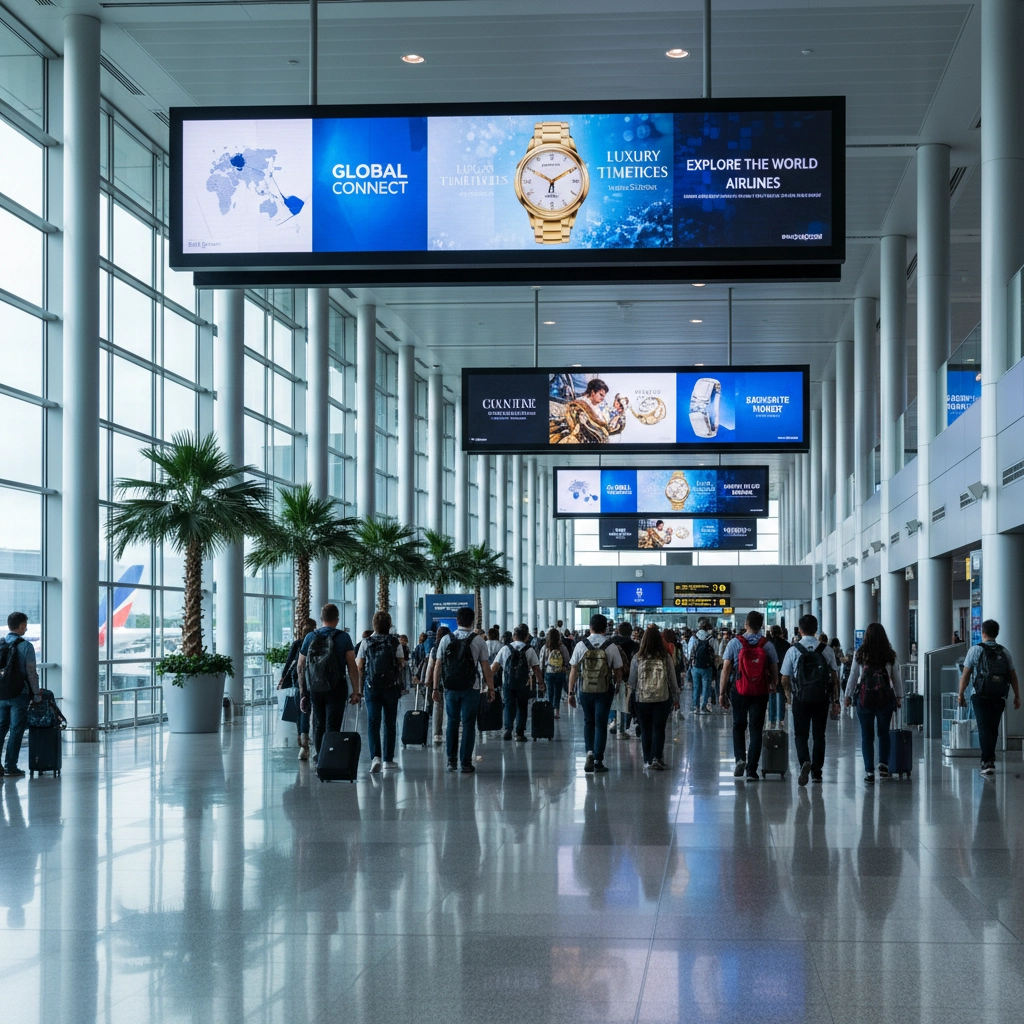
Start with the location that matters most, then build your campaign outward with purpose. Radius targeting gives you the flexibility to reach audiences a few miles from a venue or across an entire regional market: without losing control of where your message appears.
For global brands such as Johnson & Johnson, this precision creates a practical balance between scale and relevance. A campaign can support a broad product launch across New York, Los Angeles, Paris, Hong Kong, Munich, and Italy while adapting the radius, venue mix, schedule, and creative to each local market.
RAMM helps media buyers and planners bring that strategy to life through a global digital out-of-home network and flexible targeting options. With radii ranging from 2.5 to 50 miles, you can align every placement with audience movement, campaign goals, and real-world conditions.
Understand What Each Radius Can Do
Do not treat radius targeting as a simple “small or large” setting. Each distance serves a different strategic role.
Use a 2.5-mile radius for immediate action. This tight range works well around a specific grocery store, pharmacy, restaurant, medical office, or retail location. It can help you reach people who are already nearby and more likely to visit, shop, or respond soon.
Expand to 5 or 10 miles for local market influence. This range can capture commuters, shoppers, families, and customers traveling across a broader neighborhood or city district. It is useful when your audience may be willing to drive several miles for a product, service, or experience.
Choose 10 to 25 miles for metro-level awareness. This broader range helps connect multiple neighborhoods, transportation corridors, and commercial zones. Use it to support citywide product awareness while still anchoring delivery around meaningful points of interest.
Reach 25 to 50 miles for regional campaigns. A wide radius can support major events, tourism campaigns, destination retail, regional launches, and products distributed across several communities. It gives you the reach to surround an entire market without defaulting to untargeted media.
The most effective campaigns do not select one radius and leave it unchanged. They assign a role to each radius and measure how each ring contributes to the objective.
Build Your Campaign Around Specific Points of Interest
Begin with the locations that define success. These may include retail stores, healthcare facilities, stadiums, airports, train stations, restaurants, sports bars, corporate campuses, or event venues.
Once you identify those points of interest, set the radius around each one. Then evaluate the screens available inside the area. This process helps you move from broad geographic buying to a more intentional venue-level plan.
For example, a consumer health brand could use:
- A 2.5-mile radius around pharmacies and medical offices for product education.
- A 5-mile radius around grocery stores for household and personal care products.
- A 10-mile radius around transportation hubs to reach commuters and travelers.
- A 25-mile radius around a regional event to build broad awareness.
- A 50-mile radius around a major launch market to support sustained visibility.
This approach is especially valuable for a global portfolio such as Johnson & Johnson, where different products may require different environments and audience mindsets. A wellness message may perform well near medical offices, while a family care product may benefit from grocery and retail placements.
Explore RAMM’s digital signage and media buying services to see how location-based planning can support your next campaign.

Match the Venue to the Audience Mindset
A radius tells you how far to reach. Venue targeting tells you where your audience is already engaged.
Layer venue selection onto your radius strategy to make each impression more relevant:
- Grocery stores: Reach shoppers while they are making purchase decisions.
- Restaurants and sports bars: Connect with social audiences, sports fans, and entertainment seekers.
- Transportation hubs: Engage commuters, travelers, and people moving through high-traffic environments.
- Medical offices and pharmacies: Deliver health, wellness, and care-related messaging in attentive settings.
- Retail locations: Support product launches, seasonal promotions, and purchase consideration.
- Fitness and wellness venues: Reach audiences in environments connected to health and personal goals.
This combination gives you greater control over context. A 10-mile radius around a city may contain hundreds of possible screens, but your campaign does not need all of them. Select the venue types that support your message, then prioritize the locations that align with your audience and conversion path.
For media planners, this also creates a clearer framework for budget allocation. You can compare results by radius, venue type, city, and campaign objective instead of viewing the entire network as one undifferentiated buy.
Apply One Global Framework with Local Adjustments
Global DOOH works best when you standardize the strategy but localize the execution.
RAMM’s network spans New York, Los Angeles, Paris, Hong Kong, Munich, and Italy. These markets offer different population densities, travel patterns, cultural expectations, languages, and venue ecosystems. A five-mile radius in Manhattan will not behave like a five-mile radius across a less dense Italian market.
Keep your global campaign framework consistent:
- Define the same business objective across markets.
- Use a shared audience and venue strategy.
- Establish common creative principles.
- Maintain consistent measurement standards.
- Adjust radius size, scheduling, language, and triggers locally.
For example, a global product launch can use a tight radius around priority retail locations in New York and Los Angeles, a commuter-focused plan around transit hubs in Hong Kong, and a broader regional strategy across selected Italian cities.
This structure gives your brand a recognizable global presence while allowing each market to feel natural and relevant. Read RAMM’s guide to global DOOH from New York to Munich for more context on coordinating international campaigns.
Use Events to Activate the Right Moment
A radius becomes more powerful when you connect it to an event.
Set your campaign to activate around sports games, concerts, festivals, conferences, trade shows, store openings, or community gatherings. Then align your radius with the movement patterns surrounding that event.
Use a 2.5- to 3-mile radius for immediate venue surroundings. This zone can capture people entering a stadium, walking through nearby streets, or visiting restaurants before and after an event.
Extend to 5 or 10 miles to reach sports bars, transit hubs, hotels, and entertainment districts connected to the occasion.
Choose a 25- to 50-mile radius when the event attracts regional visitors or when you want to build awareness before the audience arrives.
A global healthcare, consumer, or personal care brand can use this approach to adapt its message around high-attendance moments without committing to constant broad-market delivery. You can support the event, reach relevant audiences, and preserve budget for the moments most likely to matter.
Let Weather Improve Relevance: and Protect Your Budget
Weather-based adjustments add another layer of intelligence to radius targeting.
Set different creative or delivery rules for specific locations. Promote hydration products when temperatures rise, wellness products during seasonal shifts, or indoor alternatives when rain begins. When outdoor conditions make a message less relevant, pause or replace it.
Rain cancellation is particularly useful for campaigns tied to outdoor activity, travel, events, or retail visits. Instead of continuing to serve a message that no longer matches the moment, you can redirect delivery to a more useful offer or pause the campaign until conditions improve.
Apply local weather logic across every market. A rain trigger in Paris may activate while a sunny-day creative continues in Los Angeles. A cold-weather message can run in Munich while a warm-weather version reaches audiences in Hong Kong.

Schedule for Continuous Presence or Daily Precision
Radius targeting gives you geographic control. Scheduling gives you temporal control.
Choose continuous campaigns when you need sustained brand presence across a market. Use daily custom campaigns when your message should follow local routines and audience behavior.
Consider scheduling:
- Morning messaging near transportation hubs.
- Lunchtime creative within a tight radius of restaurants.
- Afternoon retail promotions near grocery and shopping venues.
- Evening entertainment messaging around sports bars and event districts.
- Weekend creative around family, travel, and leisure destinations.
You can also coordinate campaigns across time zones. A global brand may begin its activation in Hong Kong, continue through European markets such as Paris and Munich, and then reach audiences in New York and Los Angeles as the day progresses.
This “follow-the-sun” approach supports global consistency while keeping each market connected to its most valuable dayparts.
Measure Each Radius and Improve the Next Decision
Do not evaluate the campaign only as a single global result. Break performance into meaningful segments.
Compare:
- 2.5-mile versus 10-mile delivery.
- Local versus regional radius performance.
- Grocery versus medical office placements.
- Event-triggered versus standard scheduling.
- Weather-responsive versus fixed creative.
- Market-level results across New York, Los Angeles, Paris, Hong Kong, Munich, and Italy.
Use available performance tracking to understand which combinations produce the strongest engagement, foot traffic, brand lift, or direct response. RAMM provides performance tracking and campaign development support, helping you refine placements and creative as the campaign progresses.
Start with a clear hypothesis. For example, you may expect a 2.5-mile radius around pharmacies to drive stronger immediate action, while a 25-mile radius around transportation hubs builds broader awareness. Test those assumptions, review the results, and adjust your next campaign with confidence.
Turn Radius Flexibility into a Global Advantage
The strongest DOOH campaigns are not simply large. They are deliberate.
Use a 2.5-mile radius when proximity matters. Expand to 50 miles when regional scale matters. Layer in venue selection when context matters. Add events and weather triggers when timing matters. Then use performance insights to make every future campaign more efficient.
For global brands like Johnson & Johnson, this framework creates a practical way to coordinate campaigns across RAMM’s network while respecting the realities of each market. You can maintain a unified brand strategy and still deliver messages that feel local, timely, and useful.

Ready to plan a more precise global DOOH campaign? Visit RAMM to explore flexible radius targeting, venue-level buying, real-time triggers, and campaign support across key international markets. Encourage engagement by sharing your campaign goals, preferred locations, or questions about building the right radius strategy.

