
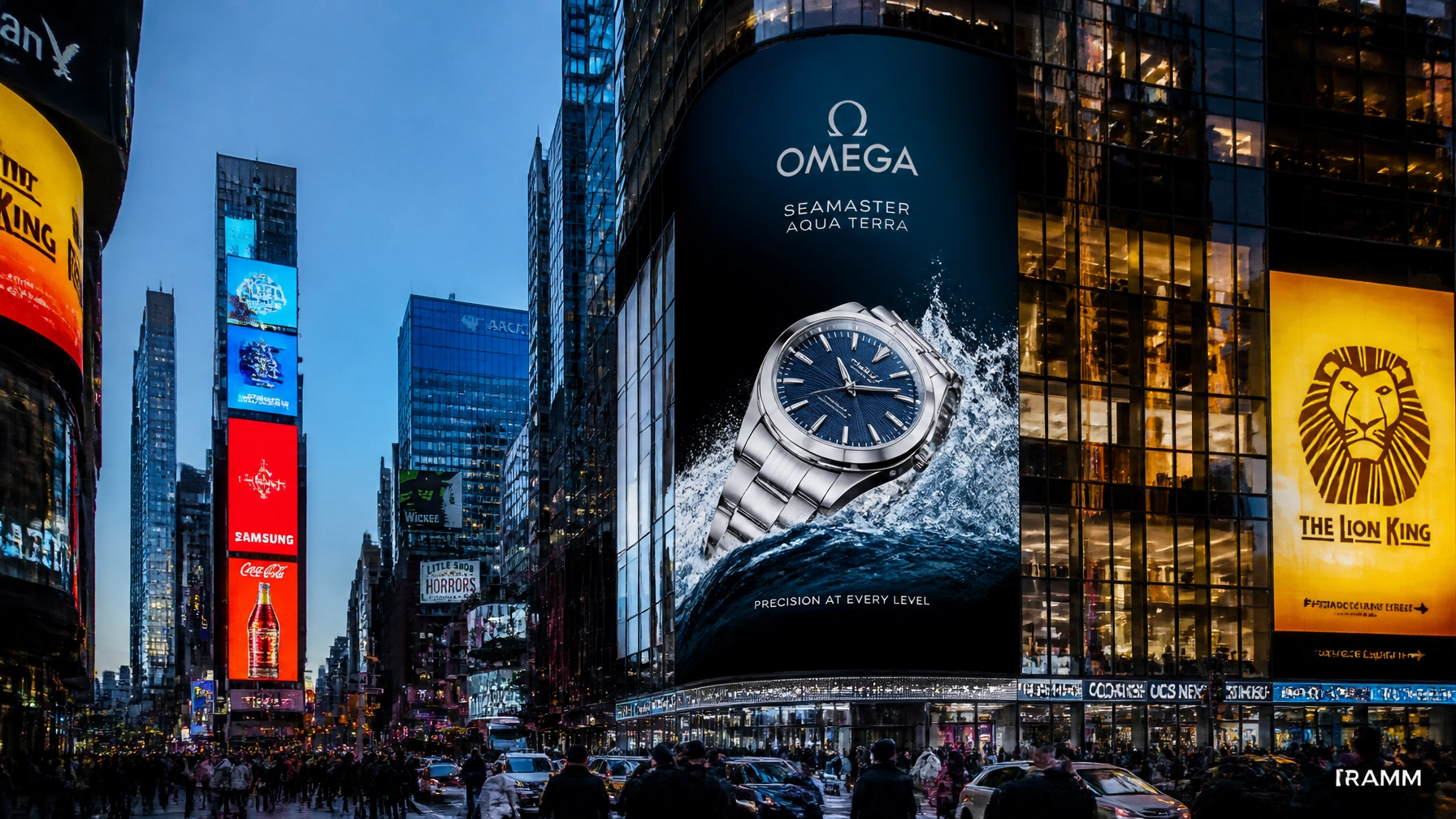
Stop settling for broad-stroke advertising that casts a wide, expensive net with little precision. In the world of Digital Out-of-Home (DOOH), the "set it and forget it" mentality is a relic of the past. To truly capture attention and drive conversion in a crowded marketplace, you must master the art of hyper-targeting. Whether you are managing campaigns for a global giant like Johnson & Johnson or a niche craft brand, your success depends on your ability to reach the right person at the right time in the right location.
Hook your audience by leveraging the power of context. DOOH isn't just about big screens; it’s about smart data. By utilizing flexible radius targeting (from 2.5 to 50 miles) and real-time triggers, you can ensure your message is as relevant as a personal recommendation. At RAMM, we facilitate these high-impact connections across the globe: from the bustling streets of New York and Los Angeles to the sophisticated hubs of Paris, Munich, Hong Kong, and Italy.
Follow these ten proven, hyper-targeted DOOH strategies to elevate your next media plan and deliver measurable results.
1. The "Morning Rush" Transit Geofence
The daily commute is one of the most predictable and high-intent windows of the day. You should target major transit hubs in cities like New York or Hong Kong during the specific 6:00 AM to 10:00 AM window. Use a tight 2.5-mile radius around major train stations and bus terminals to capture professionals before they settle into their offices.
By running ads for coffee brands, breakfast deals, or productivity apps, you meet the consumer exactly when their needs are highest. This isn’t just about being seen; it’s about being part of their morning ritual.
2. Rain-Triggered Fashion Prompts in Paris
Weather is one of the most effective triggers for consumer behavior. You can set your campaigns to remain dormant until a weather API detects precipitation in Paris. The moment the rain starts falling, your ads for umbrellas, waterproof trench coats, or cozy indoor cafes should instantly activate across the city’s high-street digital kiosks.
This level of agility ensures you aren't wasting budget on sunny days when rain gear is the last thing on anyone's mind. It makes your brand appear almost clairvoyant, offering a solution the second a problem arises.

3. The "Big Game" Sports Bar Blitz
Special events create a captive, emotionally charged audience. When a major sporting event takes place in Italy or the United States, use RAMM’s venue-targeting features to dominate screens inside and immediately surrounding sports bars and restaurants.
Set event-based triggers to run your beverage or snack ads 30 minutes before the game starts and during the halftime window. By narrowing your focus to a 5-mile radius around stadiums or clusters of sports-centric venues, you achieve a level of frequency and relevance that traditional billboards simply cannot match.
4. After-Hours B2B Networking in Munich
Business-to-business marketing requires a different set of rules. Instead of targeting the general public, focus your efforts on the office lobbies and business districts of Munich. Schedule your ads to appear during the "golden hour" of networking: 4:30 PM to 7:00 PM.
As professionals exit their buildings and head toward transit or happy hour, your message for SaaS platforms, luxury car leases, or corporate travel services will be front and center. This methodical approach ensures your B2B budget is spent where the decision-makers are actually walking.
5. The "Wellness Hub" Integration
For big-box product companies like Johnson & Johnson, context is everything. You should place your advertisements on digital screens inside medical offices and premium gyms globally. These venues offer high dwell times and a mindset focused entirely on health and self-improvement.
Maintain a logical flow in your creative: use the time spent in a waiting room to educate the consumer on a new skincare line or a child-safe pharmaceutical product. Because you are targeting specific venue types rather than broad geographies, your engagement rates will naturally climb.

6. Hyperlocal Grocery Conquesting
If you are representing a brand found on grocery store shelves, use radius targeting to "conquest" the competition. Set a 2.5-mile radius around major supermarkets in Hong Kong or Los Angeles. When a consumer is within that zone, your ad should trigger, offering a specific incentive or a "don't forget" reminder.
This strategy is particularly effective for CPG brands. By being the last digital touchpoint a consumer sees before entering the store, you significantly increase the likelihood of your product ending up in their cart.
7. Heatwave Beverage Activation
In cities prone to soaring temperatures like Los Angeles or those in coastal Italy, use temperature triggers to drive sales. Program your creative to only go live when the local temperature hits a specific threshold: say, 85 degrees Fahrenheit.
A vibrant, high-definition visual of a condensation-covered beverage is significantly more persuasive when the viewer is actually feeling the heat. This is the definition of flexible scheduling: you only pay for the impressions that have the highest conversion potential based on real-time environmental data.
8. The "Next Stop" Transit Strategy
Utilize the proximity of digital signs to major subway and rail stops in Paris or New York to guide foot traffic. Your creative should explicitly mention the proximity of a retail location: "Just 2 blocks from the next exit."
This direct advice helps the consumer make a quick decision. By syncing your DOOH placement with the flow of transit, you transform a passive advertisement into an active navigational tool. It’s an assertive way to bridge the gap between digital awareness and physical foot traffic.

9. Residential Comfort Targeting
As hybrid work remains a global staple, don't ignore where people live. Target digital signs within luxury residential complexes and neighborhood hubs in Munich or Milan. These screens are perfect for home-delivery services, local amenities, or "treat yourself" luxury goods.
By utilizing a broader 10-to-15-mile radius around residential clusters, you can build brand familiarity in a low-stress environment. A well-crafted campaign in these intimate settings should linger in your readers’ minds long after they’ve entered their homes.
10. The "Wait Time" Medical Office Play
Dwell time is the secret weapon of the DOOH world. In medical offices across the RAMM network, the average person spends 15 to 20 minutes in a focused environment. Use this opportunity for long-form visual storytelling that would be lost on a highway billboard.
Break down complex product benefits or share a brand story that requires more than a three-second glance. This is where you can truly "hook your readers" with information that is valuable to their current situation, fostering a sense of involvement and trust in your brand.

Execute Your Vision with Precision
The future of advertising isn't just digital: it's hyper-local and hyper-relevant. By moving away from broad, wasteful campaigns and toward trigger-based, venue-specific strategies, you position your brand as a leader in the modern marketplace.
Whether you are looking to dominate a single city block or launch a synchronized campaign across New York, Paris, and Hong Kong, the tools are now in your hands. Use imperatives in your planning: identify your triggers, set your radius, and choose your venues with surgical precision.
Are you ready to stop guessing and start targeting? We encourage you to explore the possibilities of our global network and see how radius-based DOOH can transform your ROI.
Learn more about our global reach and hyper-targeted capabilities at https://rammww.com. We invite you to engage with us: reach out with your questions or share your most successful targeting stories in the comments.

