

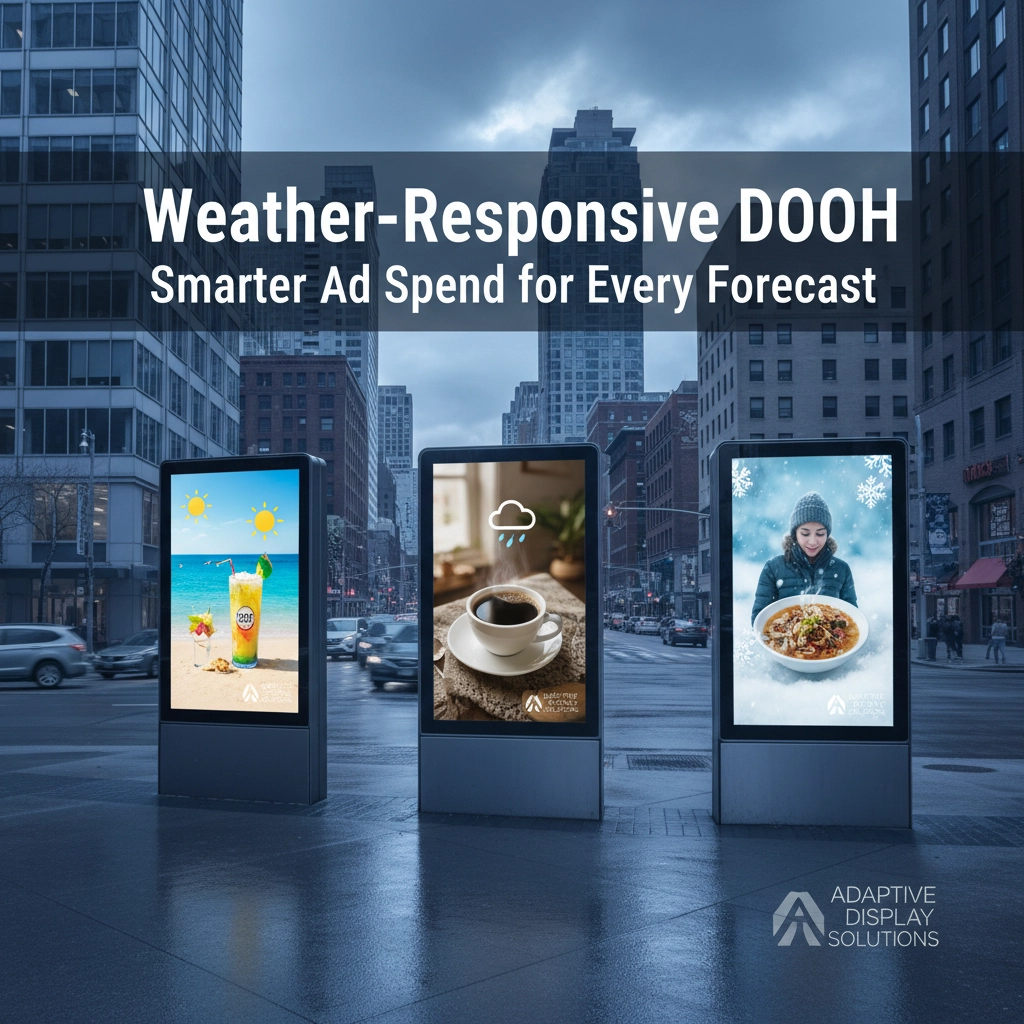
Weather changes everything about consumer behavior: and smart advertisers are finally catching on. Instead of running the same digital billboard creative whether it's 90 degrees or snowing, weather-responsive DOOH campaigns automatically adjust your messaging based on real-time conditions. This isn't just clever marketing; it's a fundamental shift toward precision advertising that can slash wasted spend while boosting engagement rates by up to 89%.
The concept is straightforward: your ads appear only when weather conditions align with consumer intent. Rain triggers umbrella ads, heat waves activate sunscreen campaigns, and cold snaps push hot beverage promotions. But the execution requires sophisticated targeting capabilities and flexible campaign management: exactly what RAMM's network delivers across thousands of digital signage locations.
How Weather Triggers Transform Campaign Performance
Weather-responsive advertising operates through automated trigger systems that monitor real-time meteorological data across your target locations. When specific conditions are met: temperature thresholds, precipitation forecasts, UV index levels: pre-built creative variations deploy instantly across your selected venues.
This automation eliminates the guesswork from seasonal campaigns. Instead of running ice cream ads all summer regardless of actual temperatures, your budget activates only during heat waves when purchase intent peaks. Cold, rainy July days won't waste impressions on beach gear promotions that consumers will ignore.
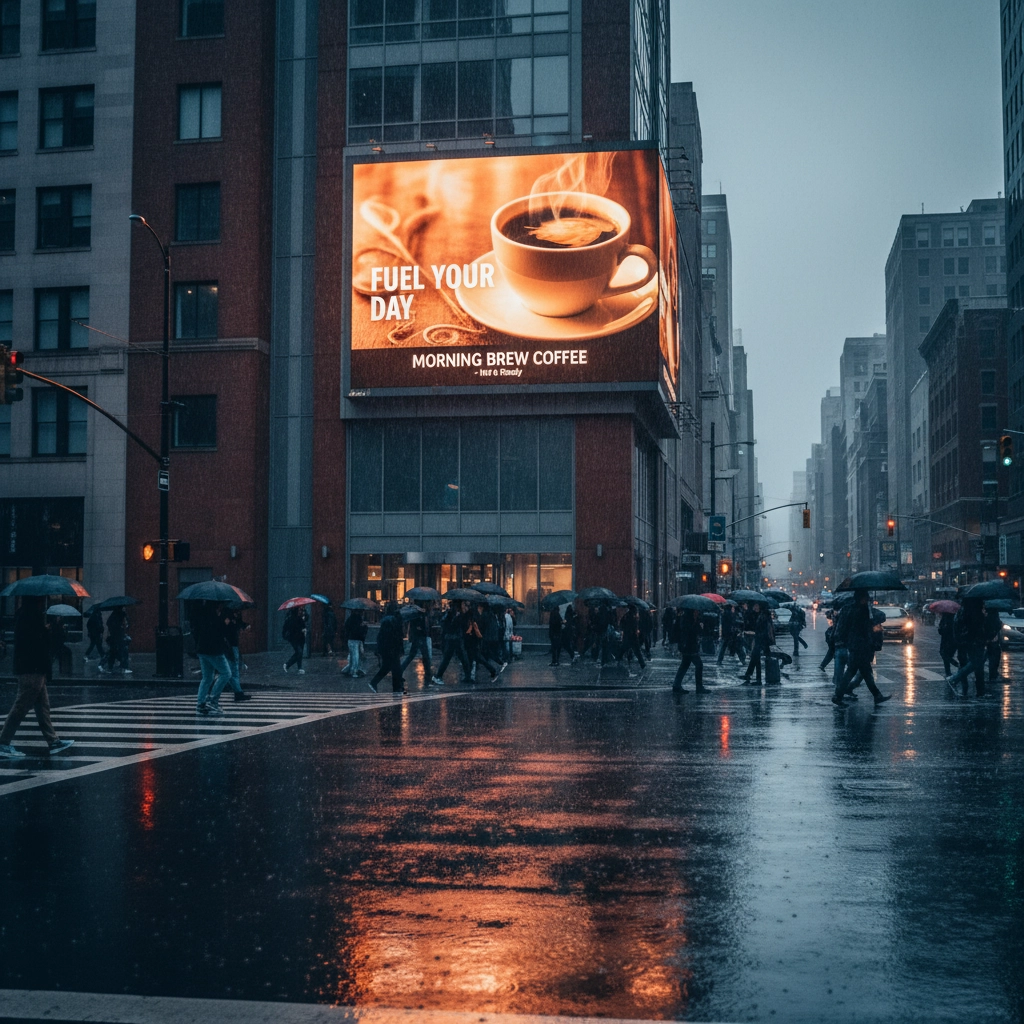
The psychological impact drives the results. Weather-triggered ads create immediate relevance that generic campaigns can't match. A coffee shop billboard advertising hot drinks during an unexpected cold front taps into real-time consumer needs, generating urgency that translates to foot traffic and sales.
RAMM's network excels at this precision because our radius targeting capabilities: from 2.5 to 50 miles: let you respond to hyperlocal weather patterns. A thunderstorm hitting downtown doesn't mean your suburban locations need rain-triggered campaigns, and our system recognizes these micro-geographic differences automatically.
Real-World ROI: The Numbers Don't Lie
Molson Coors proved weather-responsive DOOH's effectiveness by configuring beer advertisements to activate only when temperatures exceeded 23°C with sunny conditions present. The results spoke volumes: 89% more clicks, 50% more brand mentions, and 33% more social media comments compared to their traditional seasonal approach.
Stella Cidre took a different approach, triggering billboards exclusively during dry weather that was 2°C warmer than average. This precision targeting delivered a staggering 65.6% year-over-year sales increase while cutting wasted impressions in half. The brand reached the right consumers at exactly the right moment, proving that context beats frequency every time.

A major retail chain selling raincoats discovered that timing matters as much as conditions. Instead of activating ads during actual rainfall, they triggered campaigns one day before rain was forecast. This "prepare in advance" strategy captured consumers in a planning mindset, driving higher conversion rates than reactive messaging during storms.
These cases demonstrate weather-responsive DOOH's core advantage: aligning ad spend with genuine consumer intent rather than broad demographic assumptions. Your budget works harder because every impression targets someone whose immediate environment creates purchase motivation.
Implementation Strategy: Building Your Weather-Responsive Arsenal
Start by analyzing historical weather data for your target markets alongside your sales patterns. Most businesses see clear correlations between specific conditions and purchase behavior, but the thresholds vary by industry and geography. Ice cream sales might spike at 75°F in Seattle but require 85°F temperatures in Phoenix to generate the same urgency.
Develop creative assets for each weather scenario before launching campaigns. You'll need variations covering different temperature ranges, precipitation levels, and seasonal transitions. A clothing retailer might prepare light jacket ads for 50-60°F weather, heavy coat promotions for sub-40°F conditions, and swimwear campaigns for 80°F+ days.
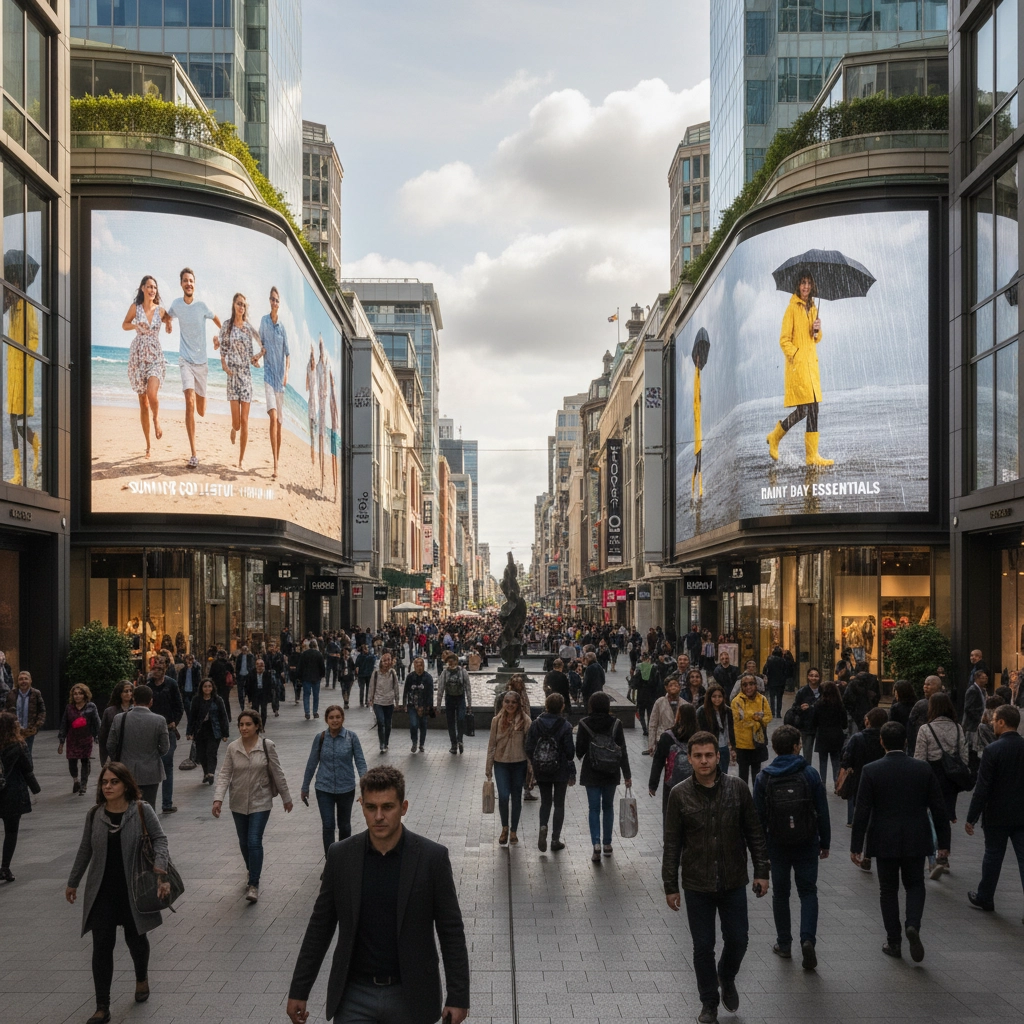
Define your trigger conditions with precision. Vague parameters like "warm weather" create inconsistent results, while specific thresholds like "temperature above 78°F with less than 20% chance of rain" generate predictable, measurable outcomes. RAMM's campaign management tools make setting these conditions simple, letting you adjust parameters in real-time based on performance data.
Test different weather triggers against control groups running standard campaigns. A/B testing reveals which conditions, creative approaches, and timing strategies work best for your specific audience. Maybe your restaurant's brunch promotions perform better when triggered by sunny Saturday mornings above 70°F, while dinner specials need rainy evening conditions to drive indoor dining.
Maximizing Flexibility Across RAMM's Network
RAMM's venue targeting capabilities amplify weather-responsive campaigns by letting you select locations where weather conditions matter most. A sunscreen brand might target beach-adjacent digital signs during UV warnings while focusing on mall locations during regular sunny conditions. This venue-specific approach ensures your weather triggers activate where they'll have maximum impact.
Our radius targeting creates additional precision layers. Set broader radiuses (25-50 miles) for regional weather patterns affecting multiple suburbs, or tighten the focus to 2.5-5 miles for hyperlocal conditions like afternoon thunderstorms in specific neighborhoods. This flexibility prevents wasted spend on irrelevant weather triggers while maximizing budget efficiency.

Campaign suspension features protect your budget during unfavorable conditions. Rain cancellation stops outdoor event promotions when forecasts predict storms, while temperature thresholds pause seasonal campaigns when conditions shift unexpectedly. These automated safeguards ensure you're never paying for impressions that won't generate results.
Special event integration adds another targeting dimension. Combine weather triggers with local events, sports schedules, or seasonal festivals to create multifaceted campaigns. A beer brand might activate stadium-adjacent digital signs only during warm game days, maximizing relevance through both weather and event timing.
Advanced Tactics: Weather + Location + Timing
Layer multiple targeting criteria for surgical precision. Combine weather triggers with time-of-day parameters to capture specific behavioral windows. Coffee shops can activate hot beverage ads during cold morning commute hours while switching to iced drink promotions for warm afternoon periods.
Geographic micro-targeting within RAMM's network lets you respond to weather variations across small areas. Urban heat islands, lake effects, and elevation changes create different conditions within the same metropolitan area. Our system recognizes these micro-climates, adjusting campaigns accordingly.

Predictive triggers based on weather forecasts extend your planning horizon. Activate outdoor gear campaigns 24-48 hours before predicted storms, giving consumers time to prepare while capturing early purchase intent. This forward-looking approach outperforms reactive campaigns that wait for conditions to arrive.
Seasonal transition periods offer unique opportunities for weather-responsive campaigns. Spring's unpredictable temperature swings, summer's heat waves, fall's sudden cooling, and winter's varying conditions create multiple trigger opportunities throughout the year. Build comprehensive creative libraries covering all possibilities.
Measuring Success: KPIs That Matter
Track weather-specific performance metrics alongside traditional campaign measurements. Monitor impression efficiency during different conditions, measuring cost-per-relevant-impression rather than total reach. Weather-responsive campaigns should show higher engagement rates during triggered conditions compared to baseline periods.
Analyze conversion lift during weather-triggered activations versus control periods. Strong weather-responsive campaigns demonstrate measurable sales increases during optimal conditions while maintaining cost efficiency during slower periods through campaign suspension.
Monitor geographic performance variations to optimize radius targeting. Some locations may respond better to specific weather triggers, while others show consistent performance regardless of conditions. Use this data to refine venue selection and budget allocation across RAMM's network.
Your Weather-Responsive Future Starts Here
Weather-responsive DOOH represents the evolution from broadcast advertising to precision marketing. Instead of hoping your message reaches interested consumers, you're targeting people whose immediate environment creates genuine purchase motivation. The result: higher engagement, better conversion rates, and smarter budget allocation.
RAMM's flexible targeting capabilities: venue selection, radius customization, campaign suspension, and real-time adjustments: provide the foundation for sophisticated weather-responsive campaigns. Whether you're promoting seasonal products, weather-dependent services, or location-specific offerings, our network adapts to deliver your message when and where it matters most.
Ready to transform your DOOH campaigns with weather-responsive targeting? Contact RAMM today to discover how our hyperlocal network can align your advertising spend with real-time consumer intent. Your competitors are still running static campaigns: while you'll be capturing customers at the perfect moment.
Visit rammww.com to explore our targeting capabilities and start building campaigns that respond to the world around your customers.

