
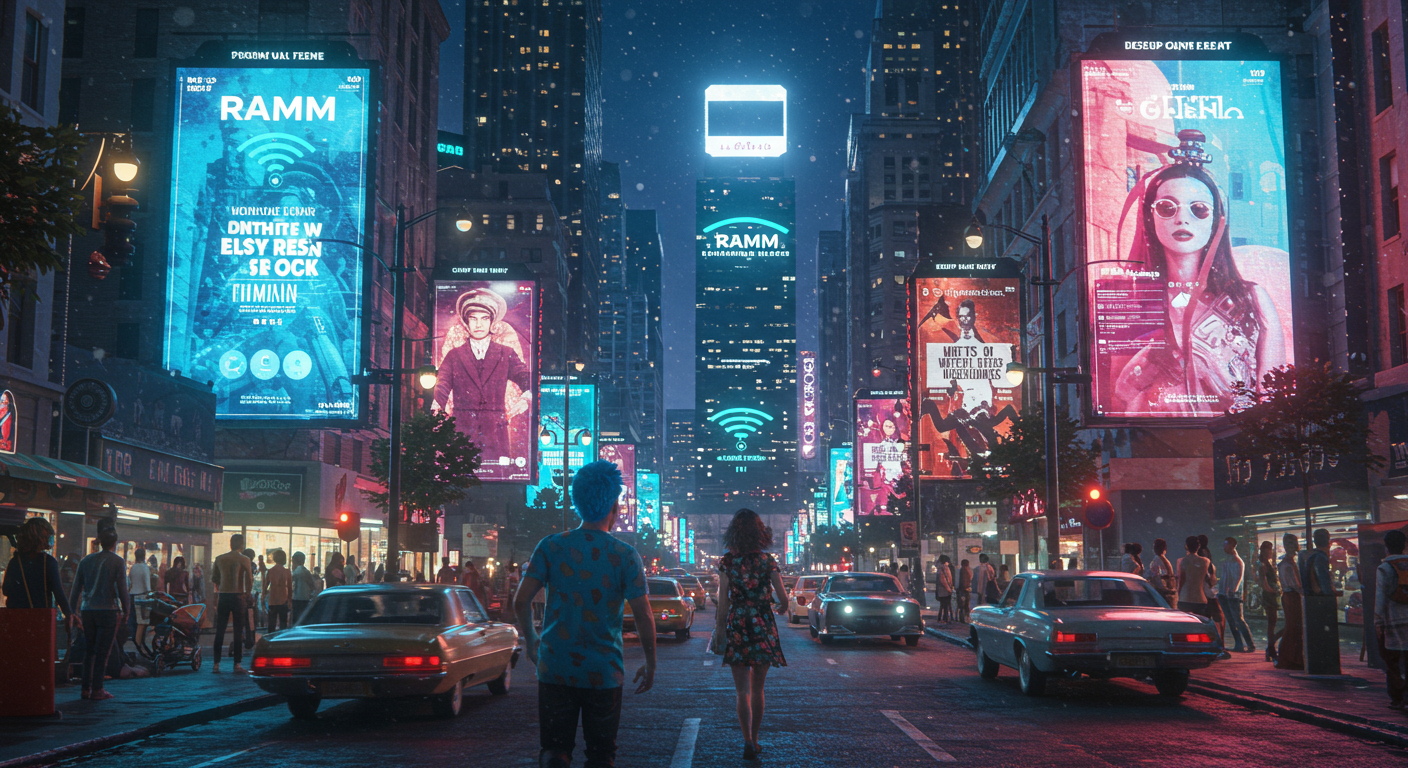
Stop treating your DOOH budget as a choice between a large fixed flight and no campaign at all. Build a flexible, always-on schedule that keeps your brand visible, gives you room to adjust, and lets every dollar work harder.
Digital out-of-home advertising has moved beyond rigid booking structures. You can now combine steady brand presence with short bursts, daily custom campaigns, and responsive delivery. That shift gives media buyers, planners, agencies, and in-house brand teams more control over how campaigns run across real-world environments.
RAMM Worldwide supports this approach across major markets, including New York, Los Angeles, Hong Kong, Paris, Munich, and Italy. With the right strategy, you can maintain global consistency while adapting delivery to local audiences, venues, priorities, and business conditions.
Redefine What “Always-On” Means
Always-on does not mean spending the same amount every day or running one creative without interruption. It means keeping your campaign active while giving yourself the flexibility to change the pace.
Start with a reliable baseline. This foundational layer keeps your brand present across selected digital signs and environments. Then add budget increases when you want to support a product push, strengthen local visibility, or reach a priority audience.
Think of your schedule as a series of operating levels:
- Baseline presence: Maintain consistent visibility with a controlled daily budget.
- Priority periods: Increase delivery during important sales windows or planned marketing pushes.
- Custom daily activity: Adjust creative, locations, audience focus, or spend based on the day’s objective.
- Responsive bursts: Activate additional delivery when a relevant condition creates an opportunity.
This structure replaces the old “commit everything or wait” mindset with a more practical model. You remain visible without overcommitting your entire budget before you know what is working.
Explore RAMM’s digital signage and media buying services to see how campaign delivery and placement can work together.

Separate Your Budget by Job, Not Just by Market
Do not divide your budget only by city or channel. Divide it by purpose.
A brand awareness campaign may need steady reach across a broad audience. A retail-support campaign may need more frequent delivery near selected businesses. A product reminder may work best through short, repeated bursts during specific parts of the day.
Create budget groups that reflect the role each campaign plays:
-
Reach and recognition
Use a consistent schedule to build familiarity and reinforce your brand. -
Consideration and education
Rotate messages that explain a product benefit, service, or reason to choose your brand. -
Action and conversion support
Concentrate delivery around locations, audiences, or time windows connected to the next step. -
Testing and learning
Reserve a portion of the budget for new creative, locations, or audience strategies.
This approach helps you protect core visibility while still making room for experimentation. You do not have to risk the entire campaign to learn what performs best.
With RAMM, you can plan campaigns around a selected venue, business, or digital sign within a flexible radius of approximately 2.5 to 50 miles. Use that capability as part of your budget architecture rather than treating it as a one-time placement decision.
Build a Schedule That Changes With the Day
Your audience does not behave the same way from morning to evening. Your DOOH schedule should reflect that reality.
Use dayparts to organize delivery around changing routines and campaign objectives. You might prioritize early-day visibility for awareness, increase frequency near midday for retail or restaurant messaging, and use evening delivery to support entertainment, travel, or household purchase decisions.
Then customize the creative by time. A single campaign can include several variations:
- A morning message focused on preparation or convenience.
- A midday message that highlights availability or value.
- An afternoon message that creates urgency.
- An evening message that reinforces brand recall or encourages the next action.
This is not simply about showing more ads. It is about making each impression feel more appropriate to the moment.
A flexible schedule also makes it easier to manage continuous daily campaigns. You can run a different message on a weekday than on a weekend, change the priority location for a specific day, or rotate product lines without rebuilding the entire media plan.

Use Rules Instead of Rebuilding Campaigns
Create campaign rules before launch so your team can make adjustments without starting from scratch.
Your rules might define:
- How much budget each market receives.
- Which audiences receive priority.
- Which venues or businesses should be included.
- How often each creative appears.
- When a campaign should increase, decrease, pause, or resume.
- Which conditions justify a short-term budget shift.
This turns your DOOH plan into a responsive framework. You can preserve the campaign’s overall direction while adjusting individual parts as conditions change.
For example, you could maintain a steady baseline across several markets while increasing delivery near selected businesses during a promotional window. You could also set a temporary campaign variation to run around a local event or pause a message when rain makes the offer less relevant.
The important point is control. Triggers such as events and weather should support your strategy rather than define it. Use them as optional layers within a larger always-on plan.
Industry resources from Outfront describe DOOH’s ability to support flexible campaign lengths, dynamic creative, and contextual delivery. Broadsign also explains how digital screens can be scheduled and updated based on timing, location, audience, and campaign objectives.
Keep Global Campaigns Consistent and Local Campaigns Relevant
Global brands need a balance between control and adaptability. Your core brand identity should remain consistent across markets, but your delivery should reflect the audience and environment in each location.
RAMM Worldwide’s presence across New York, Los Angeles, Hong Kong, Paris, Munich, and Italy gives you a foundation for coordinated campaigns across regions. Use one central strategy while allowing local teams to adjust:
- Creative language and cultural context.
- Product priorities.
- Delivery times.
- Audience emphasis.
- Venue and business selection.
- Local budget levels.
A global campaign does not need to look identical on every screen. It needs to feel recognizable, relevant, and well-managed wherever it appears.

Refresh Creative Without Losing Recognition
Flexible scheduling works best when your creative system is flexible too.
Prepare a family of related assets instead of relying on one execution. Keep the key brand elements consistent, then vary the message according to the audience, time, location, or campaign objective.
Use a simple creative structure:
- One clear headline.
- One primary product or brand benefit.
- One strong visual focus.
- One easy next step.
- Consistent brand colors and recognizable design elements.
Then create variations that can rotate throughout the campaign. This helps reduce creative fatigue and gives you more opportunities to match the message to the moment.
Do not overload the screen with information. DOOH gives you repeated opportunities to communicate, so you do not need to explain everything in one exposure. Let one message introduce the benefit, another reinforce it, and a later message prompt action.
A well-planned creative rotation keeps readers engaged and gives your campaign room to build meaning over time.
Measure the Schedule, Not Just the Campaign
Evaluate how your schedule performs at the daily and weekly level. A total campaign report may show delivery, but it will not always reveal which scheduling decisions created the strongest results.
Review performance by:
- Market.
- Audience.
- Time of day.
- Creative variation.
- Venue or business type.
- Budget level.
- Campaign objective.
- Exposure period.
Look for patterns. Did a consistent baseline improve reach? Did a short burst create stronger engagement? Did one creative variation perform better in a particular environment? Did changing the schedule help you control waste?
RAMM provides performance tracking and AI-driven campaign analytics to support informed adjustments. Use reporting as an active planning tool, not a final formality.
When you measure the schedule itself, you gain a clearer view of how timing, repetition, creative, and budget work together. That insight helps you make stronger decisions in the next cycle.
Turn Flexibility Into a Competitive Advantage
The strongest DOOH plans are not necessarily the largest. They are the plans that remain useful when priorities change.
Set your baseline. Divide your budget by purpose. Create daily custom variations. Establish clear rules. Keep your global identity consistent while allowing local relevance. Monitor performance and shift your investment based on evidence.
This approach gives you more than flexibility. It gives you resilience. You can support long-term brand awareness while responding to short-term opportunities. You can test without disrupting your entire plan. You can keep campaigns active without allowing them to become stale.
Your DOOH budget is not all-or-nothing. It is a set of decisions you can manage, refine, and improve.
Create a More Flexible DOOH Plan With RAMM
Build a campaign that matches your audience, budget, schedule, and business goals. Visit RAMM Worldwide to explore targeted digital out-of-home advertising across global markets, selected venues, businesses, and digital signs.
When you are ready to shape your next campaign, contact RAMM to start the conversation. Encourage engagement by inviting your team, clients, or media partners to share their questions and ideas about always-on DOOH scheduling.

