
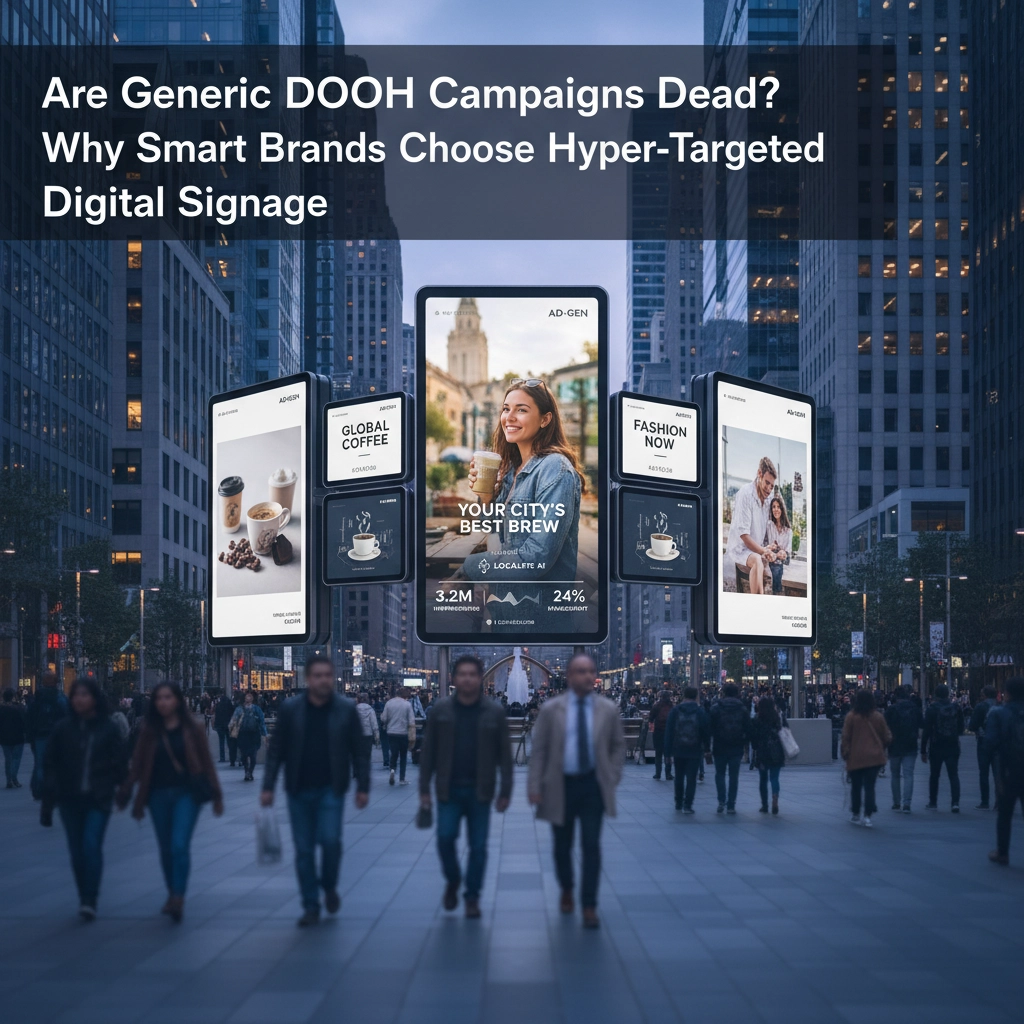
Generic DOOH campaigns are rapidly becoming obsolete as the advertising industry undergoes a fundamental transformation toward performance-driven, data-informed marketing. The era of static billboards with broad messaging and vague impression estimates has given way to a new paradigm where smart brands leverage hyper-targeted digital signage to drive measurable business results.
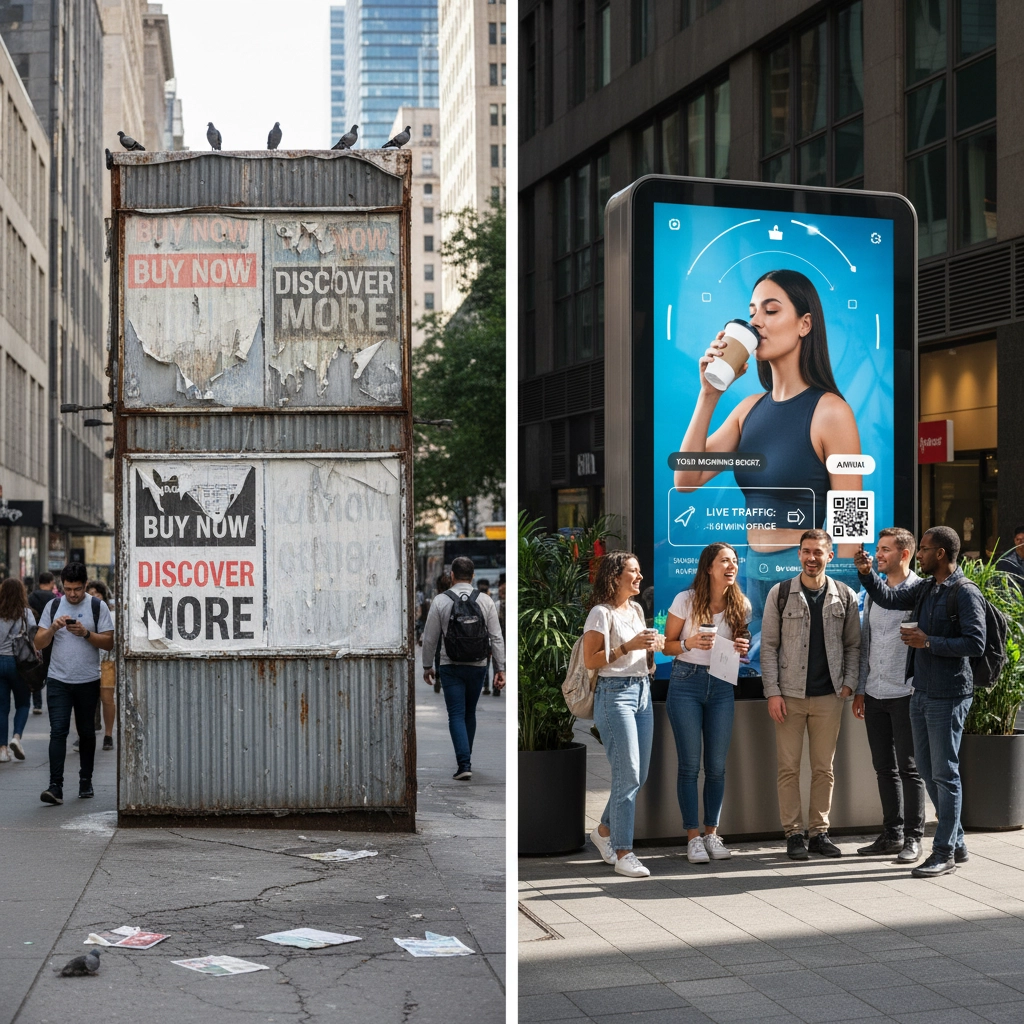
You're witnessing the death of mass-market outdoor advertising. What once defined out-of-home media: broad targeting, low accountability, and slow execution: is no longer competitive in today's precision-focused marketplace.
The Death Knell for Generic Mass Marketing
The advertising landscape has fundamentally shifted away from the spray-and-pray approach that dominated DOOH for decades. Generic campaigns that cast wide nets hoping to catch anyone within viewing distance are being replaced by sophisticated targeting strategies that reach specific audiences at precisely the right moments.
Consider this: 69% of viewers take action after seeing a targeted street-level ad, with 92% of those who saw ads with clear directions making immediate purchases. These numbers don't lie: precision targeting dramatically outperforms generic messaging.
The days when DOOH served primarily as a top-of-funnel brand awareness tool are ending. Instead, hyper-targeted DOOH now functions as a full-funnel performance channel capable of driving engagement, conversions, and measurable ROI that you can track and optimize.
Why Hyper-Targeting Delivers Superior Results
Real-World Contextual Relevance
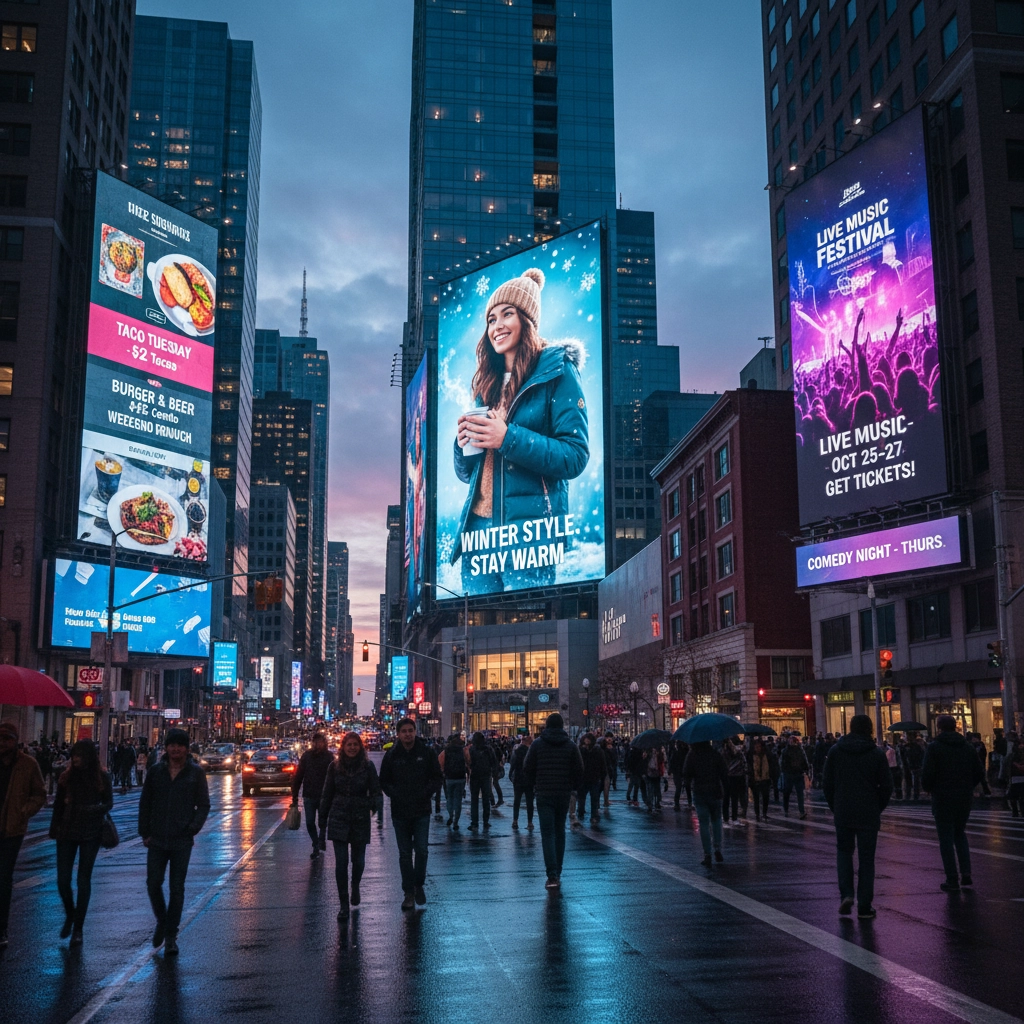
The primary advantage of targeted DOOH lies in its ability to deliver messages based on immediate, physical context. Unlike traditional digital advertising that relies on behavioral data collected weeks ago, hyper-targeted DOOH uses real-world relevance factors to maximize impact right now.
You can show weather-responsive content that displays different fashion looks based on current local conditions, or promote seasonally relevant products to audiences who are already receptive due to environmental factors. This contextual approach: delivering the right message at the right place and time: consistently outperforms generic campaigns.
Programmable Audience Parameters
Modern programmatic DOOH platforms enable you to bid on digital signage based on specific targeting parameters including time of day, day of the week, temperature, external conditions, and footfall patterns. This level of precision was impossible with traditional static billboards.
You can now trigger campaigns based on:
- Local weather conditions and temperature changes
- Peak traffic times and footfall patterns
- Special events and real-time local happenings
- Demographic data and audience behavior
- Business hours and location-specific factors
Contextual triggers like these increase DOOH ad effectiveness by approximately 17%, giving you a significant competitive advantage over brands still running generic campaigns.

The Performance Marketing Revolution
Smart brands now demand accountability from every advertising dollar. With the right data and tools, DOOH sits comfortably within performance marketing mixes alongside digital channels, providing measurable outcomes that generic campaigns simply cannot deliver.
You can now measure specific performance metrics including:
- Lift in website traffic by geolocation using mobile ID data
- Foot traffic increases to retail locations from exposed audiences
- Changes in branded search volume and cost-per-click
- Conversion rates before, during, and after campaigns
- Real-time engagement and response rates
This measurability transforms DOOH from a "brand awareness" expense into a performance marketing investment with clear ROI metrics.
The Data-Driven Advantage
Research shows that 82% aided ad recall for targeted DOOH demonstrates that precise messaging creates stronger mental engagement compared to generic approaches. When you target specific venues, demographics, and contexts, your message resonates more deeply with audiences.
The DOOH market itself reflects this shift, forecast to reach $19.08 billion in 2025 while growing at 6.79% annually through 2030. This expansion is driven significantly by tech and direct-to-consumer brands that understand the critical importance of precise targeting and measurable outcomes.
RAMM's Flexible Targeting Approach
RAMM revolutionizes how you approach venue targeting and radius targeting for your business location advertising campaigns. Instead of settling for generic placements, you gain access to flexible campaigns that target any venue, business, or digital sign within customizable radius parameters from 2.5 to 50 miles.
This flexibility means you can:
- Target specific grocery stores, restaurants, and transportation hubs
- Reach audiences at sports bars during game times
- Connect with patients at medical offices
- Adjust radius targeting based on campaign goals
- Schedule campaigns for optimal timing and frequency
Weather-Based Intelligence
RAMM's weather-based adjustments ensure your campaigns run only when conditions are optimal. Rain cancellation features protect your budget from weather-related visibility issues, while temperature-triggered messaging promotes relevant products when audiences are most receptive.
You can create sophisticated trigger systems that automatically adjust your messaging based on real-time weather conditions, ensuring maximum relevance and engagement.
Event-Based Activation
Special event triggers allow you to capitalize on local happenings, sports events, concerts, and community gatherings. Your campaigns can automatically activate when attendance spikes, ensuring you reach larger audiences during peak engagement periods.
This event-based approach transforms static generic campaigns into dynamic, responsive marketing that adapts to real-world conditions and opportunities.
The Bridge Between Digital and Physical Worlds
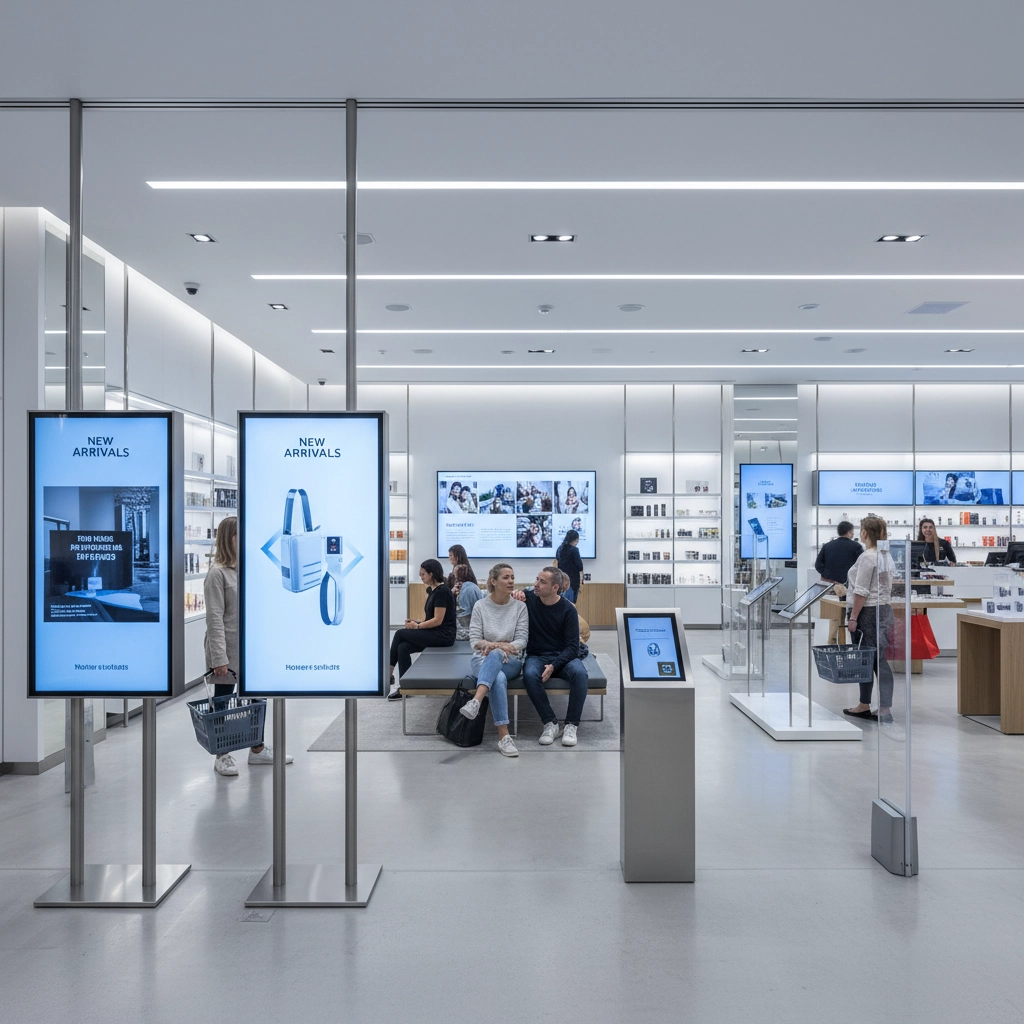
Hyper-targeted DOOH excels at bridging digital and physical consumer experiences. Many DOOH screens are connected devices displaying premium content in high-engagement environments: hotel rooms, bars, restaurants, gyms, and airports: while others are strategically positioned throughout the shopping journey at retail points of purchase.
This positioning allows you to meet consumers in moments when purchase decisions are actually being made, with messaging tailored to their immediate context and needs. Generic campaigns cannot compete with this precision and timing.
The Competitive Advantage of Precision
Brands investing in smart, hyper-targeted digital signage strategies gain competitive advantages through relevance, measurability, and real-world impact that mass-market approaches simply cannot deliver.
Your competitors still running generic DOOH campaigns are essentially throwing money at broad audiences hoping something sticks. Meanwhile, you can target specific locations, demographics, and contexts with laser precision, measuring every interaction and optimizing for maximum ROI.
The writing is on the wall: or rather, on the digital billboard. Generic DOOH campaigns are dead, and smart brands are already reaping the benefits of hyper-targeted, flexible, and measurable digital signage strategies.
Transform Your DOOH Strategy Today
The shift from generic to hyper-targeted DOOH isn't coming: it's here. Brands that adapt to precision targeting, flexible radius parameters, and weather-based intelligence will dominate their markets, while those clinging to generic campaigns will watch their advertising dollars disappear into irrelevant impressions.
Ready to leave generic DOOH campaigns in the past? Contact RAMM today to discover how our flexible targeting platform can transform your local advertising strategy with precision venue targeting, customizable radius parameters, and intelligent campaign triggers that actually convert.
Don't let your competition get ahead with smarter targeting while you're still broadcasting to everyone and reaching no one.

