
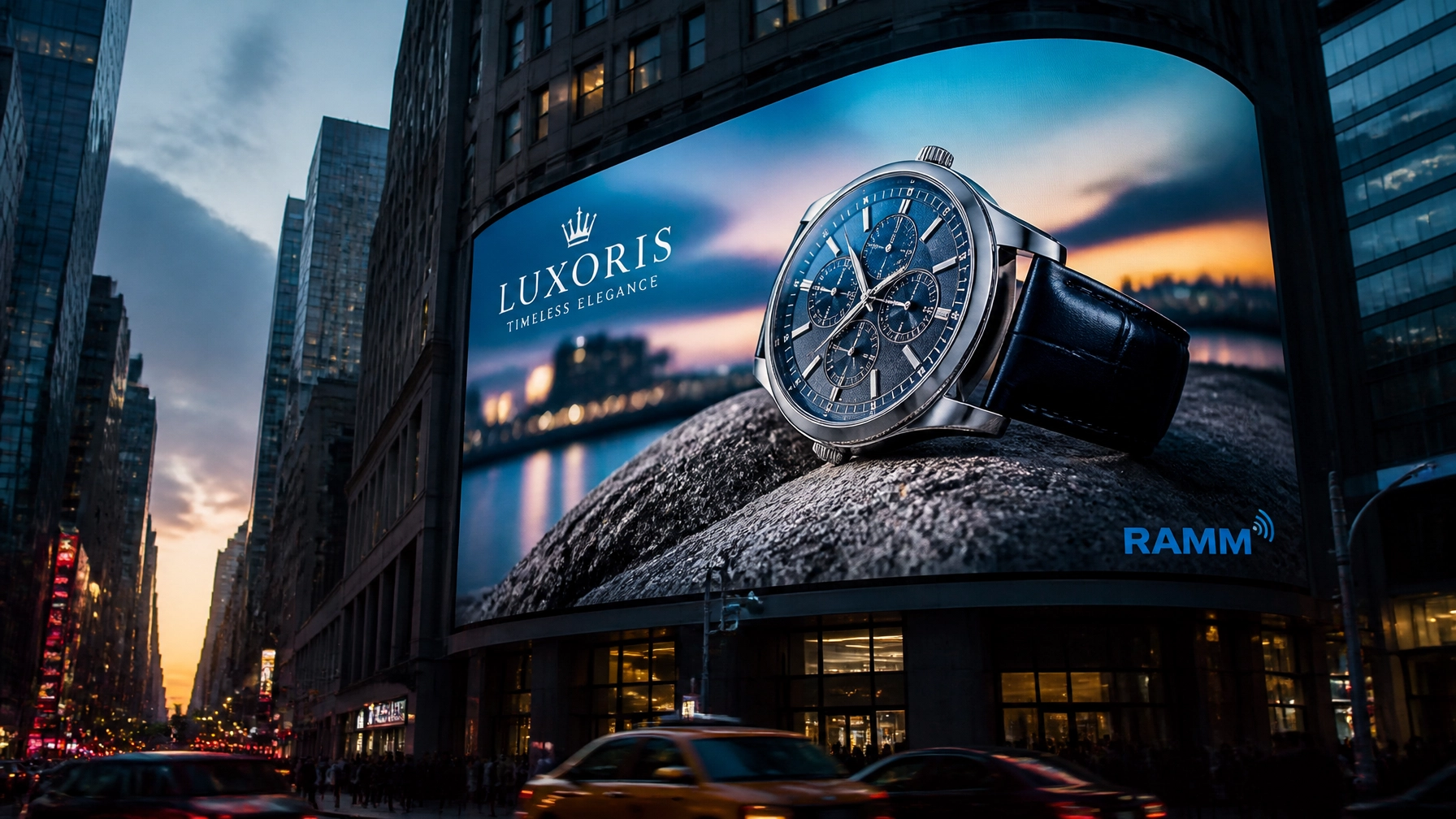
Stop wasting your marketing budget on "proximity" that doesn't convert. In the fast-paced world of local advertising, many brands fall into the trap of thinking that simply being near a customer is enough. It isn't. To truly capture attention and drive action, you need a strategy that combines surgical precision with high-impact visibility.
Most traditional local campaigns are riddled with inefficiencies: from overly broad targeting to static messaging that ignores the world around it. If you want to move the needle for your brand or your clients, you must evolve. This guide identifies the seven most common mistakes in local advertising and shows you exactly how hyper-targeted Digital Out-of-Home (DOOH) advertising through RAMM transforms these pitfalls into competitive advantages.
1. The "Wide Net" Fallacy
The Mistake: You are casting a net that is far too wide. Many advertisers believe that setting a 50-mile radius around a city center counts as "local." In reality, this often leads to thousands of wasted impressions on people who will never visit your physical location.
The Fix: Use hyper-precise radius targeting. With the right DOOH network, you can narrow your focus to a flexible radius as small as 2.5 miles or expand up to 50 miles only when it makes tactical sense. Target specific venues, not just zip codes. Whether you need to reach shoppers in a high-end grocery store in Los Angeles or commuters in a Paris transit hub, hyper-targeted DOOH ensures your message is seen exactly where your audience lives, works, and plays.
2. Practicing Venue Agnosticism
The Mistake: Treating every screen the same is a recipe for irrelevance. If your ad for a premium health supplement is playing in a sports bar at 11:00 PM, you’ve likely missed your target. Many local campaigns fail because they don't account for the context of the environment.
The Fix: Implement venue-specific targeting. Align your creative with the mindset of the viewer in that specific moment.
- Grocery Stores: Capture the attention of decision-makers when they are in "buying mode."
- Medical Offices: Reach a captive audience in a high-trust environment.
- Sports Bars: Engage a social, high-energy crowd with timely offers.
- Restaurants: Influence dining and lifestyle choices in real-time.
By selecting the right business types within the RAMM network, you ensure your brand is part of the consumer's daily journey in a way that feels organic and helpful, rather than intrusive.

3. Ignoring Environmental and Weather Triggers
The Mistake: Running a "one-size-fits-all" creative regardless of what’s happening outside. If you are advertising cold brew coffee during a sudden rainstorm in Munich, your message loses its punch. Traditional OOH is static, but the world is dynamic.
The Fix: Deploy weather-based adjustments. One of the most powerful features of modern DOOH is the ability to trigger or cancel campaigns based on real-time environmental data. If it starts raining, swap your outdoor dining ad for a "delivery and comfort food" creative instantly. This level of responsiveness ensures your brand always feels relevant and "in the moment," significantly increasing the likelihood of conversion.
4. Relying on Rigid, Static Scheduling
The Mistake: Committing to a "set it and forget it" schedule. Markets move fast, and consumer behavior shifts based on events, holidays, and even local traffic patterns. If your campaign can't pivot on a dime, you’re leaving money on the table.
The Fix: Embrace flexible scheduling and special event triggers. Hyper-targeted DOOH allows for custom daily campaigns that can be turned on or off to coincide with local festivals, sporting events, or major conferences. Reach the crowds in New York during Fashion Week or target the business elite in Hong Kong during a major financial summit. You control the "when" as much as the "where," allowing for a level of tactical agility that traditional media simply cannot match.

5. Falling Into the Regional Homogenization Trap
The Mistake: Using the same creative for Paris, Munich, and Italy without accounting for local nuances. Even within the same country, a campaign in New York should look and feel different than one in Los Angeles.
The Fix: Leverage a global footprint with local sensitivity. A truly effective hyper-targeted strategy uses a global network to scale while allowing for localized creative variations. Use language, imagery, and cultural touchpoints that resonate specifically with the neighborhood you are targeting. Because DOOH is digital, you can run multiple versions of your creative simultaneously across the world, ensuring that your brand speaks the local "language" everywhere from the streets of Italy to the business districts of Hong Kong.
6. Over-Reliance on the "Digital-Only" Bubble
The Mistake: Thinking that social media and search ads are the only way to reach a modern audience. As digital fatigue grows and ad-blockers become the norm, your online-only ads are frequently ignored or hidden.
The Fix: Bridge the gap between the digital and physical worlds. DOOH provides the high-impact, "un-skippable" visibility that mobile ads lack, while maintaining the data-driven targeting that makes digital marketing so effective. When a consumer sees your brand on a massive, vibrant screen in a transit hub and then sees a retargeted ad on their phone later that day, the reinforcement is powerful. It moves your brand from a flickering pixel on a screen to a real-world presence.

7. Failing to Measure Beyond the Impression
The Mistake: Measuring success solely through "estimated reach." In the world of big-box products and major brands like Johnson & Johnson, you need more than just vanity metrics. You need to know if your local spend is driving real-world foot traffic or sales lift.
The Fix: Use the analytical power of DOOH. Modern platforms offer sophisticated measurement tools that track how many people were exposed to your ad and subsequently visited your location or a partner retailer. This data allows you to optimize your campaigns in real-time, shifting budget away from underperforming venues and doubling down on the screens that are actually delivering results.
Take Command of Your Local Strategy
The transition from broad-stroke advertising to hyper-targeted DOOH is not just a trend; it is a necessity for brands that want to remain relevant in a crowded marketplace. By avoiding these seven common mistakes, you position your brand as a leader in innovation and efficiency.
Hook your readers with precision, maintain a logical flow between their daily habits and your brand, and use the professional, high-impact tools at your disposal to create an immersive brand experience. Whether you are targeting a single block or a global network of cities like NY, LA, HK, Paris, and Munich, the power of hyper-targeting is your greatest asset.
Ready to revolutionize your local reach? Explore the possibilities of hyper-targeted advertising and start building your custom campaign today. Visit RAMM Worldwide to learn how our global network can put your brand on the map, literally.

Maintain a forward-looking perspective and keep your readers engaged by inviting comments, questions, or sharing your own experiences with local advertising shifts below. Let’s start the conversation and refine the future of out-of-home media together.

