
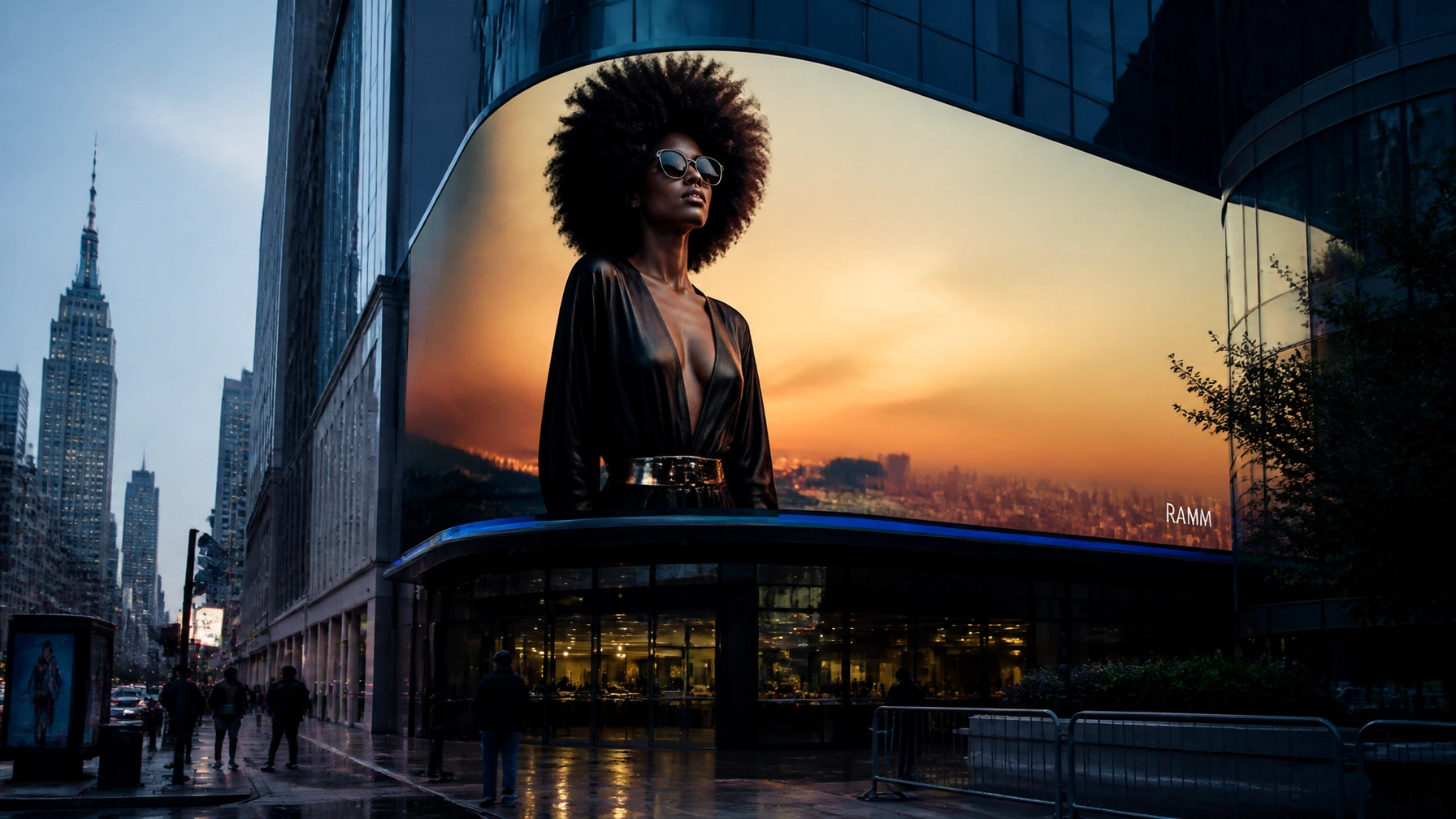
Stop wasting your advertising budget on broad, unrefined campaigns that reach everyone but influence no one. In the modern landscape of Digital Out Of Home (DOOH) advertising, precision is not just an advantage: it is a requirement. If you are a media buyer or a brand manager for a major product line, you need to stop thinking about "awareness" in vague terms and start thinking about hyper-targeted impact.
Choosing the right DOOH strategy requires a deep understanding of how geography, context, and timing intersect. Whether you are launching a global campaign across New York, Paris, and Hong Kong, or a localized push in Munich or Los Angeles, the strategy you select will determine your ROI. This guide will walk you through the most effective hyper-targeted strategies, comparing venue-based targeting with radius-based precision to help you build a campaign that actually converts.
Master the Geography of Impact: Radius Targeting
Radius targeting is the cornerstone of local dominance. When you need to drive foot traffic or own a specific neighborhood, you must master the art of the geographic fence. Unlike traditional billboards that sit stationary regardless of who passes by, hyper-targeted DOOH allows you to activate screens within a flexible radius of your choice: typically ranging from 2.5 to 50 miles.
Define Your Serviceable Area
Hook your readers by being where they are. If you are managing a product for a big-box retailer or a specialized medical office, your first step is to define the "action zone." A 2.5-mile radius is perfect for dense urban centers like Manhattan or central Paris, where foot traffic is high and travel distances are short. Conversely, a 50-mile radius is more appropriate for regional hubs or when your product is a "destination" brand that customers are willing to travel for.
Execute with Precision
Maintain a logical flow by aligning your radius with your logistics. If your delivery service only covers a 10-mile zone, advertising outside that zone is a literal waste of money. Use radius targeting to:
- Conquest Competitors: Place ads within a tight radius around your competitor’s flagship stores.
- Support Local Retail: Activate screens within 5 miles of the specific grocery stores that stock your product.
- Dominate Events: Surround stadiums or convention centers during major industry events.

Harness Context: Venue-Based Targeting
While radius tells you where someone is, venue targeting tells you who they are and what they are doing. This is where you align your message with the consumer's mindset. To choose the best strategy, you must match your product to the environment where the consumer is most likely to act.
Choose Your Environment
RAMM’s network allows you to target specific venue types with surgical precision. Consider these high-impact options:
- Grocery Stores: Reach household decision-makers while they are in the "buying mode." This is the gold standard for CPG brands like Kraft or Johnson & Johnson.
- Sports Bars: Perfect for beverage brands and entertainment services during high-energy social gatherings.
- Medical Offices: Ideal for pharmaceutical companies and health-conscious products where the audience is already focused on wellness.
- Transportation Hubs: Capture the attention of high-value commuters in cities like Hong Kong or New York as they move through airports and train stations.
Align Mindset with Message
A well-crafted introduction to a product in a grocery store feels like a helpful suggestion; the same ad in a medical office might feel out of place. Use venue targeting to ensure your creative matches the vibe of the location. If you are in a sports bar, your ad should be high-energy and social. If you are in a transit hub, it should be quick, punchy, and mobile-friendly.

The Power of Triggers: Weather and Event Integration
The most advanced DOOH strategies are not static; they are reactive. To truly stay ahead of the competition, you must utilize weather and event-based triggers. This allows your campaign to adapt in real-time, ensuring you are never paying for impressions that don't make sense.
Weather-Based Adjustments
Imagine a campaign for an umbrella brand that only activates when the forecast predicts rain in Munich, or a sunblock campaign that kicks in when the UV index hits a certain level in Los Angeles. RAMM provides the flexibility to schedule these triggers automatically. You can even set "rain cancellation" rules: if a local event is rained out, your ads for that event stop immediately, saving your budget for a better time.
Real-Time Event Triggers
Hook your audience by reacting to the world around them.
- Sports Wins: Trigger a celebratory ad for a local team immediately after a victory.
- Commute Times: Adjust your messaging based on traffic density in major corridors.
- Daily Custom Campaigns: Rotate your creative throughout the day: morning coffee ads for commuters, and evening meal kits for the ride home.

Comparing the Strategies: Which is Right for You?
To help you decide, let's look at how these strategies stack up against common business goals. A well-crafted strategy often uses a combination of these elements.
| Strategy Type | Best For | Key Advantage |
|---|---|---|
| Radius Targeting (2.5-50 miles) | Driving foot traffic, local retail support. | Maximum proximity and local intent. |
| Venue-Based Targeting | Niche audience segments, CPG products. | High contextual relevance and mindset alignment. |
| Trigger-Based Targeting | Seasonal products, reactive brand moves. | Efficiency; only pay when the "moment" is right. |
| Global Network Push | International brand launches, luxury goods. | Scale across NY, LA, HK, Paris, Munich, and Italy. |
A successful strategy usually starts with a venue (e.g., "I want to reach people in sports bars") and then layers on a radius (e.g., "only within 10 miles of my distribution centers"). This dual-layered approach ensures both quality and proximity.
Global Footprint, Local Precision
When you work with a network like RAMM, you aren't limited by geography. You have the ability to execute these hyper-targeted strategies on a global scale. From the high-fashion districts of Milan and Paris to the tech hubs of San Francisco and the bustling markets of Hong Kong, your strategy remains consistent while your execution is localized.
Maintain a logical flow between your international goals and your local tactics. You can run a synchronized campaign that triggers a "New York Morning" ad at 8:00 AM EST and a "Paris Evening" ad at 8:00 PM CET, all from a single dashboard. This level of control is what separates modern media planners from the traditionalists of the past.

Finalize Your Strategy Today
Choosing the best hyper-targeted DOOH strategy is about moving from "broadcasting" to "narrowcasting." By combining flexible radius targeting, specific venue selection, and real-time triggers, you create a campaign that is both efficient and irresistible.
A well-crafted strategy should linger in your readers’ minds, prompting them to rethink how they reach their customers. Start by identifying your primary venue, setting your ideal radius, and letting the data drive your results.
Ready to dominate your market with hyper-targeted precision?
Explore the possibilities of the global RAMM network and start building your custom campaign today. Whether you need to cover a 2.5-mile radius in New York or a 50-mile reach across the Italian countryside, we have the tools to make it happen.
Visit RAMM Worldwide to get started.
We encourage engagement by inviting your comments and questions: how are you currently using DOOH to reach your target audience?

