
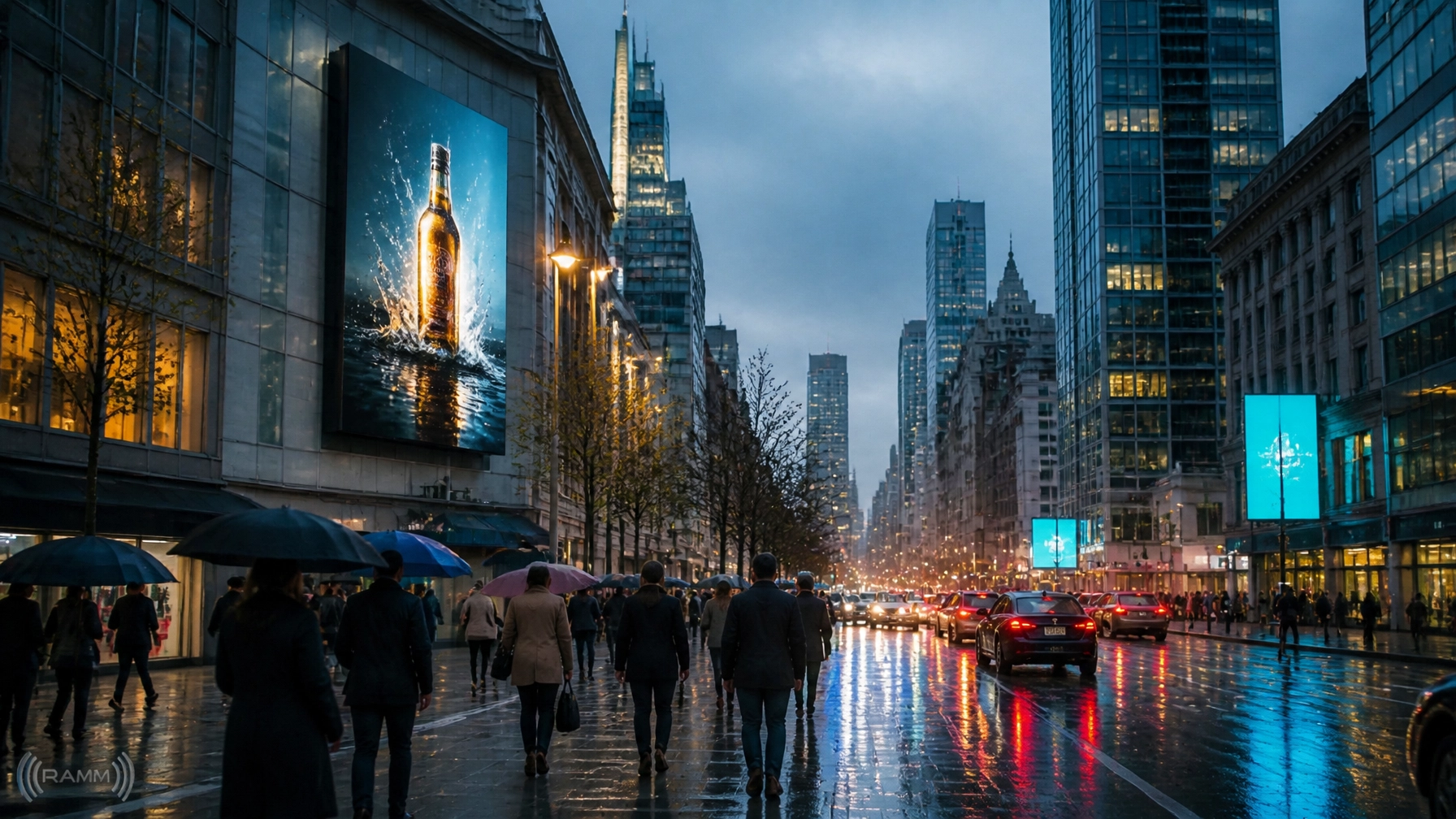
Stop treating weather as background information. Use it as a live media signal that helps you decide when to buy, where to appear, and what message to show.
Weather-triggered digital out-of-home advertising gives you a practical way to align your campaign with the conditions your audience is experiencing right now. A heat spike can change demand for beverages. Rain can shift people toward delivery, coffee, indoor entertainment, or waterproof products. A cold snap can create immediate interest in comfort foods, apparel, health products, and transportation solutions.
For media buyers and planners, the opportunity is not simply to make creative more dynamic. It is to make the entire campaign more responsive. You can combine hyper-targeted audiences, venue selection, flexible radius planning, dayparting, event triggers, and weather conditions to create a media plan that adapts as the real world changes.
Treat Weather as a Buying Signal, Not a Creative Detail
Many campaigns use weather only as inspiration for copy or imagery. Take the strategy further. Let weather influence the delivery of the campaign itself.
Build clear “if-then” rules into your plan:
- If temperatures rise above your category’s demand threshold, activate refreshment or cooling creative.
- If rain begins during a key shopping period, switch to delivery, indoor retail, or convenience messaging.
- If wind or severe conditions affect an outdoor event, pause the campaign or replace the message.
- If a cold front arrives during the morning commute, promote warm food, apparel, or seasonal products.
- If air quality or pollen levels change, adapt messaging for relevant health and wellness categories.
The strongest triggers connect a measurable environmental condition to a real consumer behavior. Do not start with a vague idea such as “show the ad when it is hot.” Start with the business question: What does your customer need when the weather changes?
This approach makes weather a strategic input rather than a decorative feature. It also gives you a stronger foundation for planning creative, inventory, budget, and measurement.
Build a Weather-Responsive Audience Strategy
Weather does not affect everyone in the same way. A storm may influence commuters differently from shoppers, travelers, sports fans, or families near a grocery store. Your campaign should reflect those differences.
Use location and venue context to understand how your target audience is experiencing the weather:
- Reach commuters at transportation hubs when rain or snow changes their travel plans.
- Target grocery shoppers when temperature changes influence meal planning or beverage demand.
- Reach restaurant and sports bar audiences when weather makes indoor dining and entertainment more attractive.
- Use medical offices and wellness environments for relevant seasonal health messaging.
- Select roadside and street-level screens when the audience is directly exposed to heat, wind, or rain.
RAMM supports this kind of hyper-targeted planning across digital signs, businesses, and venues. You can define a flexible radius from 2.5 to 50 miles, depending on your objective. Use a smaller radius when you want to influence immediate foot traffic around a store or venue. Expand the radius when you need broader market coverage around a retail network, transportation corridor, or regional campaign.

Do not use radius targeting as a substitute for strategy. Use it as a control layer. First identify the audience and behavior you want to influence. Then decide which radius, venues, and screens can reach that audience when the weather makes your message most relevant.
Explore RAMM’s digital signage and media buying services to see how location-focused planning can support your next campaign.
Match the Message to the Venue and the Moment
Weather-triggered DOOH works best when the ad offers a useful next step.
A rainy message near a grocery store might encourage shoppers to pick up ingredients for an easy dinner. A cold-weather message near a restaurant can promote hot beverages or comfort food. A heat-triggered ad inside a sports bar can highlight a cold drink or an upcoming game. A transportation hub can support messaging around ride services, luggage, travel apparel, or indoor destinations.
The venue changes the meaning of the weather trigger.
Use these questions to guide your placement decisions:
- Where is your audience when the condition occurs?
- What action can they take nearby?
- How much time do they have to respond?
- Should the message create urgency, convenience, or anticipation?
A screen near a point of purchase can use direct, immediate language. A screen in a transportation hub may need to build consideration during a longer wait. A roadside display should communicate the idea quickly and clearly without relying on small details.

RAMM’s venue targeting approach helps you connect weather conditions with the places where people shop, work, travel, dine, and spend time. That connection turns a broad weather insight into a practical media action.
Combine Weather Triggers With Flexible Scheduling
Weather rarely operates alone. The same temperature can create different behaviors in the morning, at lunchtime, and in the evening. A rainstorm during the commute may support one message, while rain during dinner hours may support another.
Layer weather triggers with:
- Time of day
- Weekday and weekend schedules
- Store hours
- Commuter patterns
- Meal periods
- Local event schedules
- Campaign frequency and budget limits
For example, a restaurant campaign could run warm breakfast messaging during a cool morning commute, then switch to delivery creative if rain begins near the evening meal period. A retailer could activate outdoor apparel messaging during a cold afternoon while maintaining a general brand message during milder periods.
Keep your campaign active continuously or create daily custom schedules based on your goals. Flexible scheduling allows you to avoid showing a strong weather-specific message when the audience is unlikely to act.
You should also create a default creative for periods when no trigger is active. This protects delivery and maintains brand continuity without forcing an irrelevant weather message onto the screen.
Prepare Creative for Multiple Weather States
Do not wait for the weather to change before deciding what your campaign should say. Build the creative system in advance.
Create versions for the conditions most relevant to your category:
- Sunny and warm
- Hot or humid
- Rainy
- Windy
- Cold
- Snowy
- Overcast
- Clear after a storm
Make each version meaningfully different. Change the visual mood, offer, product emphasis, and call to action. The audience should immediately understand that the message responds to the world around them.
Keep every version simple. Digital out-of-home audiences often see your message for only a few seconds. Use large visuals, short copy, strong contrast, and one clear action. If the audience is near a location, add a directional cue or proximity message when appropriate.
Dynamic creative optimization can help you change select elements while keeping the brand system consistent. For broader guidance on dynamic creative, review Broadsign’s overview of dynamic creative optimization.
Use Event Triggers Alongside Weather Conditions
Weather can change an event, and events can change the meaning of weather.
A sports campaign may need a different message if rain delays an outdoor game. A concert promotion may require a cancellation, postponement, or indoor-location update. A retail campaign may shift when a local festival, parade, or community event changes traffic patterns.
Combine event and weather triggers to make your campaign more useful:
- Promote indoor viewing when outdoor conditions deteriorate.
- Replace event countdown creative when a schedule changes.
- Increase delivery messaging around a major game during a storm.
- Adjust venue selection when a local event redirects foot traffic.
- Pause or redirect spend when conditions reduce the likelihood of attendance.
RAMM can support this broader trigger strategy through event-based DOOH planning. Weather and events should not be separate planning exercises. Together, they help you respond to the circumstances that shape real consumer decisions.
Plan Globally While Staying Locally Relevant
A global brand needs consistency, but it cannot use one weather rule everywhere. Local conditions, venue behavior, and audience needs vary by market.
RAMM provides a global presence across New York, Los Angeles, Hong Kong, Paris, Munich, and markets across Italy. You can maintain a unified campaign idea while adapting the trigger logic by location.

Run heat-responsive creative in Los Angeles while using rain or cold-weather messaging in Paris. Build market-specific schedules without losing the core brand identity. This global-local balance gives agencies and in-house teams more control over how a campaign behaves in each market.
The goal is not to make every market look different. The goal is to make every market feel relevant.
Measure the Conditions That Drive Performance
A weather-triggered campaign should be evaluated against more than impressions. Track how performance changes across:
- Triggered and non-triggered periods
- Different weather conditions
- Venue types
- Radius sizes
- Dayparts
- Creative versions
- Store or location proximity
- Foot traffic and sales signals, where available
Test a weather-triggered group against a comparable group using standard creative. Compare markets, venues, or time periods to understand whether the trigger created incremental value.
Use the results to refine your thresholds. Perhaps demand changes only after sustained rain rather than a brief shower. Perhaps a cold-weather message performs best near grocery stores but not transportation hubs. Let campaign data determine where you place budget next.
This process makes your media plan smarter over time. You are not simply reacting to weather. You are learning which conditions, audiences, venues, and messages create the strongest response.
Make Weather Part of Your Next Media Plan
Weather-triggered DOOH gives you a disciplined way to make advertising more timely, useful, and efficient. Define the consumer behavior first. Select the right venues and audiences. Set a flexible radius from 2.5 to 50 miles. Add scheduling, event logic, and weather conditions. Prepare the creative before the trigger fires. Then measure what changes.
RAMM helps you connect these decisions across a global digital out-of-home network, from local venue campaigns to multi-market brand programs.
Ready to build a more responsive campaign? Visit RAMM or contact the team to discuss your audience, markets, venue priorities, and weather-trigger strategy. Encourage engagement by sharing your questions or examples of how changing conditions influence your media plans.

