


Cross-channel attribution feels like solving a puzzle with half the pieces missing. You're running campaigns across digital billboards, mobile ads, social media, and in-store displays, but tracking how they work together? That's where most marketers hit a wall.
The truth is, consumers don't follow neat, linear paths to purchase. They might see your DOOH ad during their morning commute, check your website later, get retargeted on social media, and finally convert through a mobile app three days later. Without proper attribution, you're flying blind on which touchpoints actually drive results.
What Cross-Channel Attribution Really Means
Cross-channel attribution tracks and assigns value to each marketing touchpoint across a customer's entire journey. Instead of crediting just the last click before conversion, you get a complete picture of how different channels influence purchasing decisions.
Think of it as building a customer journey map that shows exactly how your Digital Out-of-Home campaigns connect with other marketing efforts. Every interaction gets tracked: from billboard impressions to email opens to website visits: creating a unified view of campaign performance.

The key lies in understanding that modern consumers interact with brands across an average of 6-8 touchpoints before making a purchase. Your DOOH campaign might plant the seed, social media nurtures interest, and email seals the deal. Attribution helps you see this complete story.
Why DOOH Campaigns Need Better Attribution
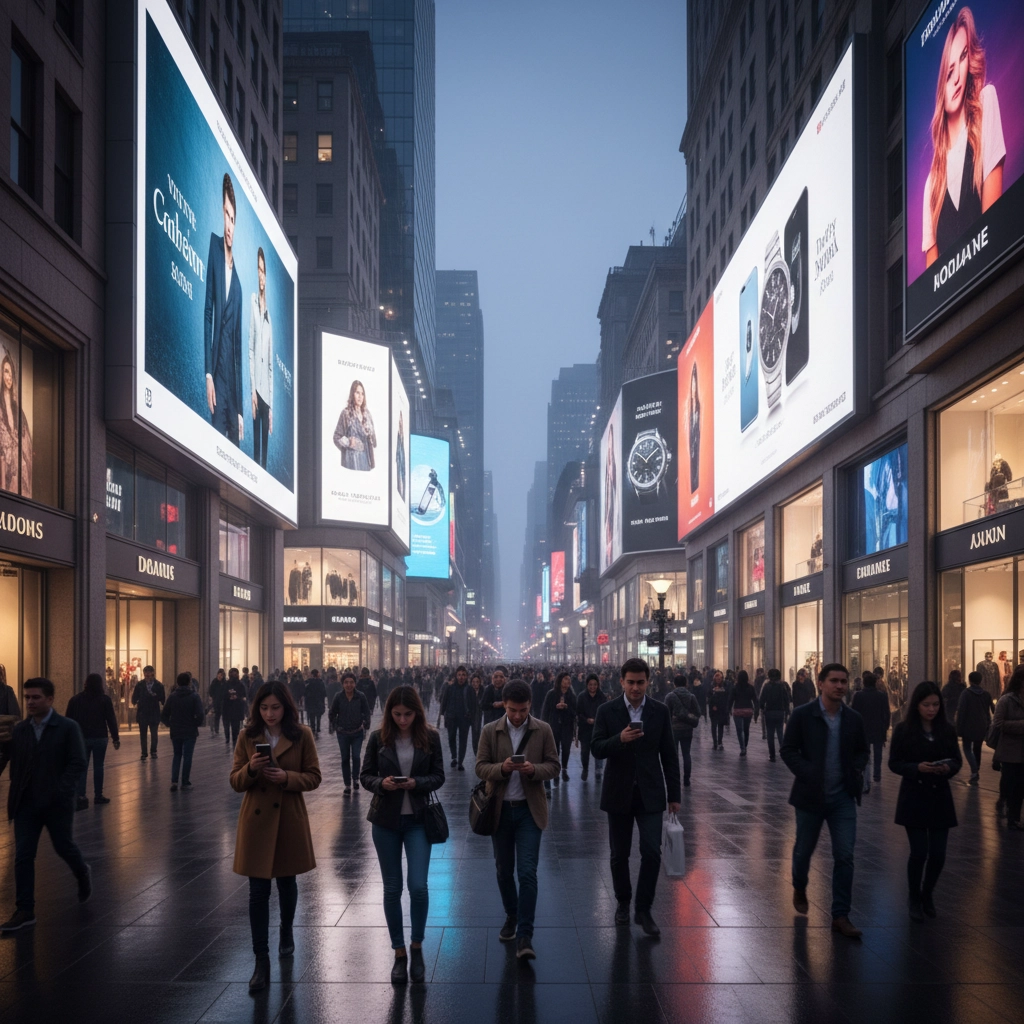
Digital Out-of-Home advertising presents unique attribution challenges. Unlike digital channels where you can track clicks and conversions directly, DOOH requires more sophisticated measurement approaches.
Location-based attribution becomes critical when measuring DOOH effectiveness. You need to track foot traffic patterns, mobile device IDs near your displays, and correlate this data with downstream conversions. The best DOOH campaigns create measurable lift in both online and offline behaviors.
Modern attribution platforms use GPS data, beacon technology, and mobile ad IDs to connect DOOH exposure with subsequent digital actions. This creates attribution models that finally give outdoor advertising the measurement sophistication it deserves.
Essential Attribution Models for Omnichannel Success
First-Touch Attribution gives full credit to the initial touchpoint that introduced customers to your brand. Use this model when measuring the awareness-building power of your DOOH campaigns. If someone first encounters your brand through a digital billboard, that touchpoint gets 100% attribution credit.
Last-Touch Attribution assigns all value to the final interaction before conversion. This model works well for measuring bottom-funnel performance but completely misses the influence of upper-funnel DOOH campaigns that started the customer journey.
Linear Attribution distributes credit equally across all touchpoints. Your DOOH campaign, social media retargeting, and final email each receive equal attribution weight. This approach works when you want to understand the cumulative effect of your omnichannel strategy.
Time-Decay Attribution gives more credit to recent interactions while still acknowledging earlier touchpoints. If your DOOH campaign happened two weeks before conversion, it receives less credit than the social media ad shown yesterday.
Position-Based Attribution heavily weights both first and last touchpoints while distributing remaining credit across middle interactions. This model recognizes that initial awareness (often driven by DOOH) and final conversion moments deserve more attribution value.

Real-World Omnichannel DOOH Campaign Examples
Retail Integration Campaigns
Nike's Location-Based Personalization: Nike connected their digital billboards with mobile app data to show personalized product recommendations based on recent purchases and running patterns. Customers who saw these targeted DOOH messages showed 34% higher conversion rates on subsequent mobile visits.
Target's Geo-Fenced Promotions: Target used proximity data from their DOOH displays to trigger mobile app notifications with relevant offers. Shoppers passing their digital billboards received instant push notifications for products featured in the outdoor ads, creating seamless online-to-offline attribution tracking.
Sephora's Beauty Studio Integration: Sephora's digital displays in shopping centers connected with their mobile app to offer virtual try-on experiences. Customers could scan QR codes from DOOH ads to access AR beauty filters, with 67% of scanner users making purchases within 48 hours.
Entertainment and Media Campaigns
Netflix's Contextual Targeting: Netflix programmed their DOOH displays to show different content recommendations based on time of day, weather conditions, and local events. Morning commuters saw coffee-friendly shows, while evening displays featured binge-worthy series. This contextual approach increased app downloads by 45% in targeted markets.
Spotify's Mood-Based Playlists: Spotify's digital billboards displayed personalized playlist recommendations that connected with users' mobile listening data. Commuters could scan codes to instantly add suggested playlists to their accounts, with attribution tracking showing 23% increase in premium subscriptions.
Automotive Campaign Integration
BMW's Test Drive Orchestration: BMW connected their highway digital displays with mobile retargeting to create seamless test drive booking experiences. Drivers who passed their DOOH ads received targeted mobile ads within 24 hours, with scheduling links that resulted in 28% more test drive appointments.
Toyota's Service Reminder System: Toyota used location data to show service reminders on digital billboards near their dealerships. Vehicle owners received complementary mobile notifications, creating attribution chains that increased service appointment bookings by 31%.
Technology Stack Requirements for Effective Attribution
Data Management Platforms (DMPs) collect and unify customer data across all touchpoints. Your DMP needs to ingest DOOH impression data, mobile app interactions, website behavior, and offline purchase information to create comprehensive customer profiles.
Customer Data Platforms (CDPs) focus specifically on known customer information, connecting DOOH exposure with identified user behaviors across other channels. CDPs excel at creating unified customer journeys that show how outdoor advertising influences online actions.
Attribution Software Solutions use machine learning algorithms to analyze touchpoint interactions and assign appropriate conversion credit. Look for platforms that specifically support DOOH measurement through location-based attribution models.
Cross-Device Tracking becomes essential when customers see your DOOH ad on their commute but convert later on their desktop computer. Identity resolution technology connects these cross-device behaviors to maintain accurate attribution chains.
Measurement Strategies That Actually Work
Track View-Through Conversions to measure customers who saw your DOOH display but didn't immediately interact. Use mobile location data to identify exposed audiences, then measure their subsequent online behaviors compared to unexposed control groups.
Implement Incremental Lift Testing by running your DOOH campaigns in select markets while maintaining control markets without outdoor advertising. Compare conversion rates between exposed and unexposed populations to isolate DOOH campaign impact.
Monitor Multi-Touch Attribution Paths to understand how DOOH fits into longer customer journeys. Look for patterns where outdoor advertising appears early in conversion paths, even if it doesn't receive last-click credit.
Set up Location-Based Attribution using GPS data and mobile ad IDs to track foot traffic increases near your physical locations after DOOH campaign exposure. This measurement approach works particularly well for retail, restaurant, and service businesses.
Common Attribution Pitfalls to Avoid
Over-Crediting Last-Click Interactions systematically undervalues DOOH campaigns that build awareness but don't drive immediate conversions. Make sure your attribution model accounts for upper-funnel influence, not just final conversion touchpoints.
Ignoring View-Through Impact means missing the majority of DOOH campaign value. Outdoor advertising rarely generates direct clicks, so you must measure view-through conversions and brand lift to capture true campaign effectiveness.
Using Inappropriate Lookback Windows can either over-attribute or under-attribute DOOH influence. Awareness campaigns might influence conversions weeks later, while promotional displays should drive more immediate action.

Advanced Attribution Techniques
Machine Learning Attribution uses algorithms to analyze millions of customer journey combinations and automatically assign optimal credit distribution. These systems continuously learn from new data to improve attribution accuracy over time.
Cohort-Based Analysis compares customer behavior patterns between DOOH-exposed and unexposed groups over extended time periods. This approach helps identify long-term brand building effects that traditional attribution models miss.
Sequential Attribution Modeling analyzes the specific order of touchpoint interactions to understand which sequences drive highest conversion rates. You might discover that DOOH followed by social media retargeting creates more valuable customers than other channel combinations.
Building Your Attribution Strategy
Start with clear measurement objectives that align with your campaign goals. Brand awareness campaigns need different attribution approaches than direct response promotions. Define success metrics before launching your omnichannel strategy.
Implement unified tracking infrastructure that connects all customer touchpoints through consistent identifier systems. Your DOOH vendor, social media platforms, email systems, and website analytics must share data seamlessly.
Test multiple attribution models simultaneously to understand how different approaches impact campaign optimization decisions. Run parallel analyses using first-touch, last-touch, and data-driven attribution to identify the most actionable insights.
Establish regular reporting cadences that provide timely optimization feedback. Weekly attribution reports enable campaign adjustments, while monthly analyses reveal longer-term trends and customer journey patterns.
Cross-channel attribution transforms DOOH campaigns from unmeasurable brand building into accountable performance marketing. When you can prove that your digital billboards drive measurable online conversions, outdoor advertising budgets become much easier to justify and optimize.

